Short answer
The shortest component determines the set count
Count the usable units of each required packaging item, divide by the number used in one finished set and round down. The smallest result is the number of complete sets you can assemble now. Then compare each item with your target order count. Supplier MOQs affect what you may need to buy and what might remain afterward; they do not make missing components available today.
Interactive planning tool
Plan complete packaging sets
Use one row per matching packaging design and size. Enter current usable stock and measured use for one complete set. MOQ is optional and means the supplier's minimum for that item, not a site-wide promise.
Enter a positive whole-number target; select at least one material and provide its stock and per-set use. Enter zero stock if none is available. Leave MOQ blank if unknown.
A purchase floor is the greater of the target shortfall and the entered MOQ. It is not a final order quantity: pack multiples, design-specific minimums, spoilage, freight and lead time are not calculated. Tissue fractions assume an approved cutting plan. For several designs, sizes or pack recipes, run each group separately.
Measure one real pack recipe first
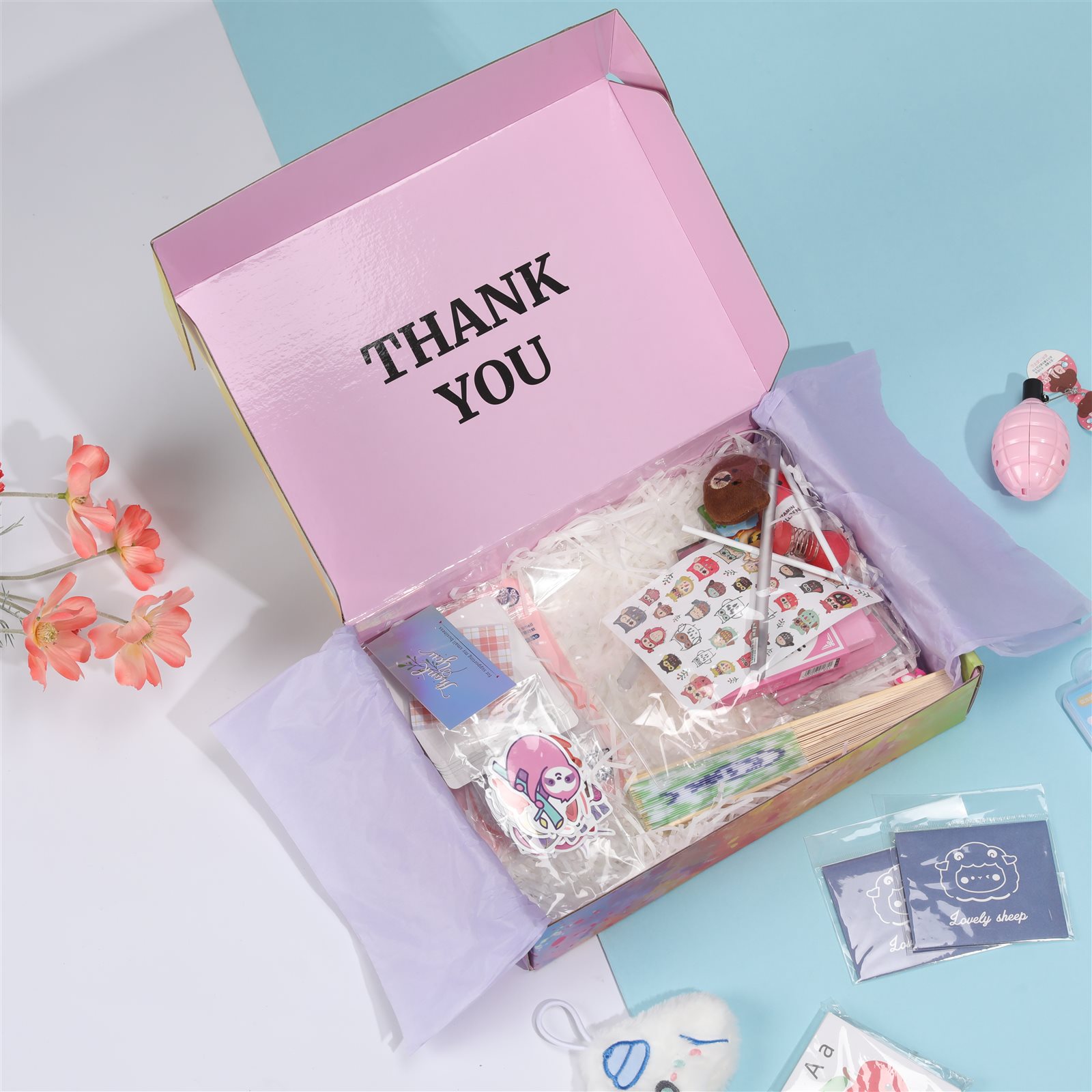
- Pack one approved order, including the exact box size, tissue sheet use, filler weight, card and sealing sticker.
- Count only usable stock of the matching design, size and color. A different artwork is not interchangeable just because it is the same product category.
- Record each supplier's MOQ for that exact item. A 100-piece minimum on cards does not automatically apply to printed boxes or a second card design.
- Enter the target number of complete orders. Use the planner to see the limiting item, individual shortfalls and possible excess after meeting a stated MOQ.
For paper filler, the tool converts measured grams per set into kilograms of stock. For sticker sheets, count usable individual stickers only if the quote and cutting plan identify how many pieces each sheet yields. Our quote comparison guide explains why those purchase units must be stated clearly.
Example: a low card count stops the set
Suppose a brand has 300 matching boxes, 500 tissue sheets, 12 kg of filler and 200 insert cards. If each set uses one box, two tissue sheets, 30 g of filler and one card, the current capacities are 300, 250, 400 and 200 sets respectively. Only 200 complete sets are possible until more cards arrive. This is illustrative arithmetic, not a Papyrn stock level, order minimum or production promise.
After packing 200, the unused stock would be 100 boxes, 100 tissue sheets and 6 kg of filler. Buying every component again at its MOQ without checking these leftovers can tie up cash unnecessarily. The separate cost-per-order calculator estimates entered material cost; it does not replace this stock check.
When should you reorder?
Look at each limiting component's actual supplier lead time, transit time, expected daily use and the buffer your business needs. A practical reorder trigger is expected use during that component's replenishment time plus a chosen safety allowance, compared with usable stock. Different artwork, print methods and delivery routes can have different timing, so confirm current lead times with the supplier rather than applying one fixed number to every item. See our multi-item order scheduling guide for sample approval and split-shipping decisions. This follows the general reorder-point logic described in Shopify's inventory planning guide; the threshold for your packaging remains your own operating decision.
What the planner does not calculate
It does not combine multiple product variants into one pool, choose a supplier, predict waste, apply case-pack multiples, calculate shipping or guarantee a reorder date. The suggested purchase floor is only the greater of a measured shortfall and the MOQ you entered. Confirm artwork-specific minimums, production increments and final quantities in the written quote.
Published November 9, 2026. The example is illustrative. The planner uses buyer-entered inventory, packing use and MOQ; it does not infer stock from photographs or set Papyrn-wide order minimums.