Short answer
No: the number needs a test and a definition
Papyrn has used approximately 90% as a working estimate of individual seed viability after cardmaking. We do not have a dated, finished-card batch test in the materials reviewed here that validates that figure. It is not a promise that 90% of cards, or 90% of the seeds on each card, will produce seedlings. A buyer should treat the figure as unverified planning context, not a printed consumer claim.
Four different things often called a "germination rate"
- Seed count: how many seeds are embedded in a sheet or finished card. Count alone says nothing about living tissue or growth.
- Viability: whether a seed has living tissue capable of development, as evaluated by a defined method. It may include dormant seeds that do not emerge in a standard germination test.
- Laboratory germination: the result for a particular seed lot, sample, and test conditions. It is not automatically the result after seeds are made into paper or printed.
- Customer planting: whether seedlings actually emerge after storage, shipping, planting, watering, and exposure to local conditions.
Iowa State University's Seed Laboratory explains why a viability test and a germination test can yield different results. Neither type of test can be replaced by counting seeds in a photograph.
Why ten seeds do not mean nine seedlings
Imagine a card with ten embedded seeds. Even if 90% viability had been established for the relevant finished-card lot, it would describe a tested sample, not a guarantee that exactly nine seeds on this individual card will grow. Seeds are not evenly interchangeable, some may remain dormant, and emergence depends on the species and conditions after the card is planted. A result measured on loose seeds before papermaking cannot be silently transferred to finished cards.
This is why a card should not say "nine out of ten seeds will grow" or "90% of cards will sprout" without a relevant test and a carefully defined claim. When no batch evidence exists, short species-specific planting directions are more helpful than a percentage.
What do supplier documents prove?
A seed-paper option sheet may list seed names, paper weights, suggested temperatures, and typical emergence windows. These are selection references, not the measured outcome of a current batch. A supplier's product standard states a requirement and a test method; it is not itself a certificate that a particular delivery met that requirement. A chemical-substance report addresses the substances tested, not seed performance. A phytosanitary document for a different product and shipment cannot establish how a seed-paper card will grow.
For a measurable claim, ask for a report tied to the actual seed lot or finished-card batch: seed identity, sample size, collection and test dates, method, conditions, result, and the point in production at which the sample was taken. If a report is for raw seeds only, say so. If the card was subsequently made, printed, or stored, do not present the earlier result as a finished-card guarantee.
Storage and planting still matter
Keep finished seed-paper cards protected from heat and moisture while waiting for use. The relevant planting instructions should be chosen after the seed is confirmed; one fixed temperature or number of days will not fit every species. Seed-paper option lists can help shortlist a flower, herb, or vegetable, but current availability and the species name still need confirmation before artwork is finalized. Colorado State University Extension describes how seed moisture and temperature affect storage life.
Planting is optional for the recipient. A thank-you card should still have a useful message if it is never planted. Our seed-paper buying guide covers where a card fits in a parcel, and our inkjet artwork guide covers readability and physical proofing.
How to describe the card without overpromising
Prefer "plantable seed-paper card" followed by the confirmed seed and practical planting instructions. Avoid a guaranteed sprout count, a fixed germination date, or a percentage based only on a supplier list or experience. If a buyer needs a numerical performance claim, arrange the relevant test first and agree exactly which product and stage it covers.
Papyrn seed-paper cards start at 100 pieces. Send the desired card size, quantity, artwork, preferred seed, and whether a lot-specific test is required. A print sample checks appearance; it is not a seed test.
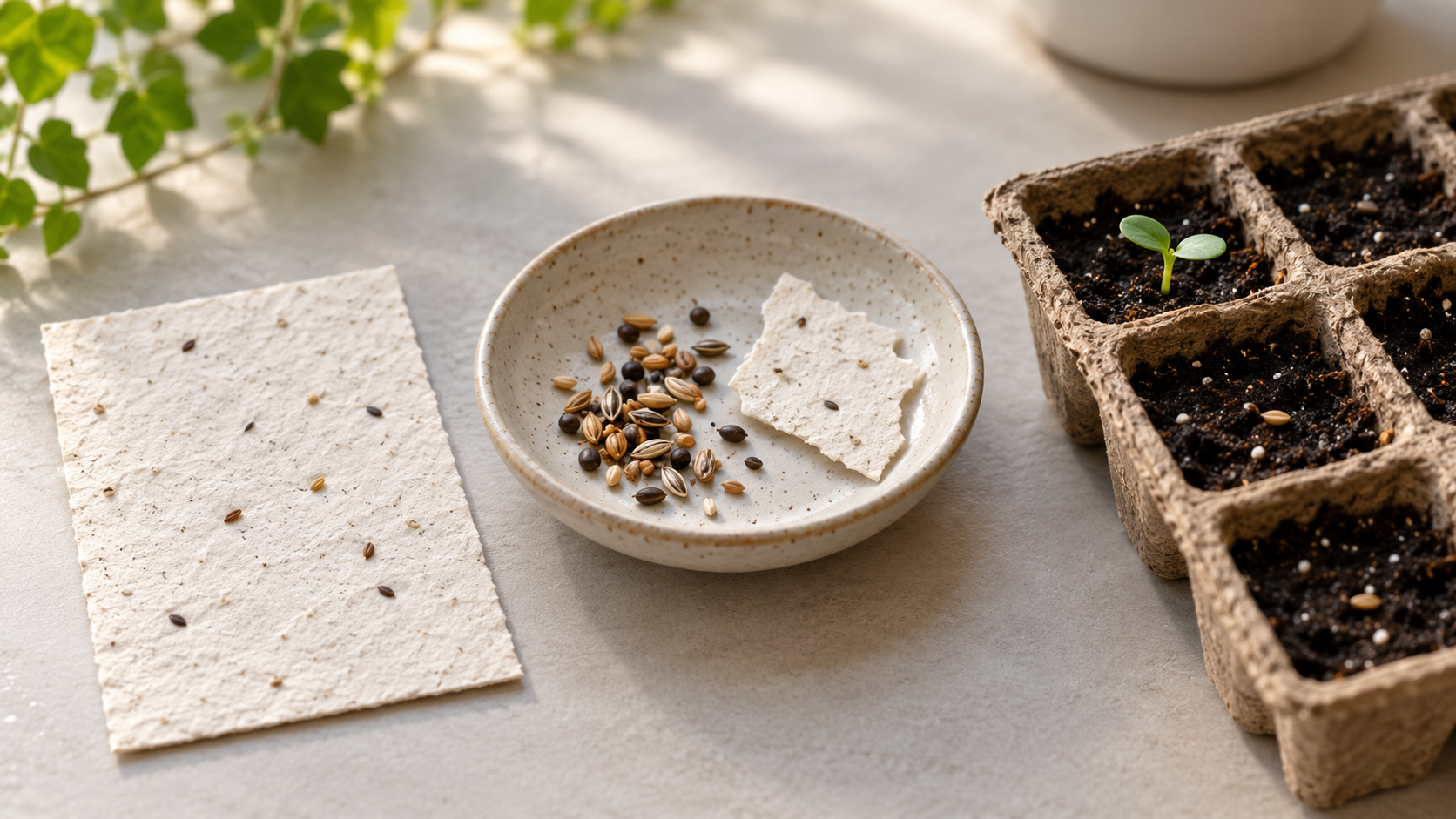
Published October 27, 2026. The image is illustrative. The approximately 90% viability figure is an unverified working estimate supplied for planning, not a batch-certified result. Supplier lists, standards, and unrelated chemical or phytosanitary documents do not prove finished-card germination. Confirm each seed and test scope before making a numerical claim.
FAQ
Seed-paper card claims
Does 90% seed viability mean 90% of plantable cards will sprout?
No. Viability concerns living seed potential, not the number of cards that sprout. Papyrn's approximately 90% figure is an unverified planning estimate, not a finished-card batch result or a germination guarantee.
If a card contains ten seeds, will nine grow?
No. Seed count is not a prediction of seedlings. Even a documented seed-lot test would need its species, sample, method, and date, and customer growing conditions can differ from test conditions.
What evidence should a buyer request for a germination claim?
Ask for a dated, lot-specific test showing the seed identity, sample, method, conditions, and result, and confirm whether testing took place before or after papermaking and printing. A supplier standard, stock list, chemical test, or phytosanitary document does not replace that result.
What planting information belongs on the card?
Identify the confirmed seed and give short instructions appropriate to that species. Do not copy a generic germination time or promise a fixed number of sprouts from every card.