Short answer
Choose for the recipient, then confirm the seed
A flower, herb, or vegetable can all make sense on a plantable card, but a familiar name is not enough. Match the card to its occasion and destination, confirm the seed's botanical identity and actual availability, then approve a printed sample and seed-specific wording. No option guarantees that every card will sprout.
Start with the card's purpose
An ecommerce thank-you card needs a short message and planting directions that fit comfortably on the sheet. An event invitation needs the event details to remain accessible even if someone plants the card. A gift insert may favor a flower because its theme suits the gift; a culinary brand may prefer to ask about herbs. These are creative starting points, not promises that a particular seed is available or appropriate for every destination.
Before comparing options, decide who will receive the card, which countries it will go to, when the campaign runs, and whether recipients are likely to have a pot or garden space. If the card goes to multiple countries, check the requirements that apply to the confirmed seed and destination before finalizing the order. See our buying guide for how a plantable insert fits into an order, gift set, or event.
A common flower request: the supplier label taiyanghua
One seed-paper option requested frequently by Papyrn customers appears on our supplier's Chinese list as taiyanghua (太阳花). That sheet provides a common-name label but no botanical name. It does not let us reliably say which species the finished card contains. In particular, we should not silently translate the label as "sunflower" or print species-specific growing instructions until the supplier confirms the identity for the actual order.
The same rule applies to every appealing flower or herb on a catalog list: request the scientific name or equivalent reliable identification, confirm the paper option and seed lot, and approve the final English name and planting text together. A catalog entry is not a live stock promise or a test of finished cards.
Five checks before artwork approval
- Identity: What botanical species is embedded in the paper? Do the supplier label, order specification, and proposed English name refer to the same seed?
- Availability: Is the chosen seed paper available for the planned quantity and production window? A reference list may be out of date.
- Destination: Which countries will receive the cards? Confirm the applicable shipment requirements for the identified seed before making a delivery promise.
- Instructions: Can the supplier provide planting guidance for that confirmed seed? Keep directions short and avoid a fixed sprout date or a guaranteed number of seedlings.
- Proof and evidence: Approve the text and inkjet print on the actual paper. If a numerical growth claim is required, ask for a relevant, dated batch test; a print sample cannot establish viability or germination.
Keep the message useful even if nobody plants it
Lead with the thank-you, invitation, or gift message. Give the planting section its own readable space, and do not put order-critical information only on something intended to go into soil. Papyrn uses inkjet printing for seed-paper cards; fine type, dense color, and QR codes should be checked on a physical sample of the selected stock. Our inkjet artwork guide explains the proofing checks.
Do not turn a supplier growing-time reference into a promise on the card. The distinction between seed viability, laboratory germination, and real customer planting is covered in our viability guide.
What to send for a quote
Papyrn seed-paper cards start at 100 pieces. Send the card size, quantity, destination countries, use case, artwork, and any preferred seed name from the supplier list. We can then confirm the seed identity and available paper before settling the planting copy. If a buyer needs a numerical performance claim, specify the evidence needed before production rather than adding a percentage later.
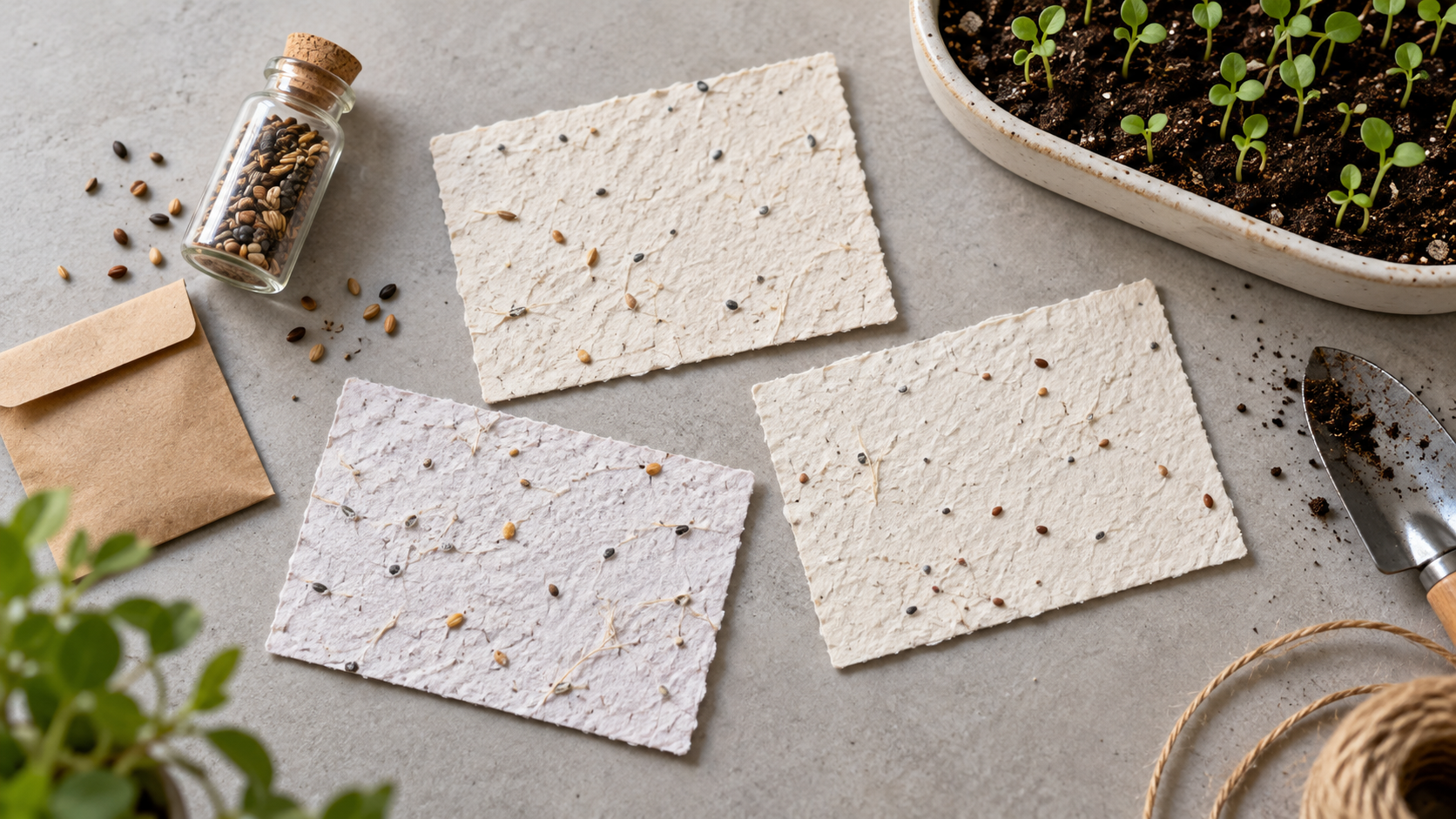
Published October 28, 2026. The supplier list identifies taiyanghua by Chinese common name only; its botanical identity and current availability remain unconfirmed. The image is illustrative. No seed selection or supplier reference time is a germination guarantee.
FAQ
Choosing seed-paper options
Can I choose a seed by its common name alone?
Use a common name to start a conversation, not to finalize planting copy. Confirm the botanical identity and the actual paper or seed lot with the supplier before naming the plant on a card.
Is Papyrn's 'taiyanghua' option a sunflower?
We cannot establish that from the current supplier sheet. 'Taiyanghua' is a Chinese common-name label, and the sheet gives no botanical name. We would confirm the species before translating it or writing species-specific planting directions.
Does a listed growing time guarantee my card will sprout then?
No. A supplier option sheet is a selection reference, not a finished-card batch test. Growing results depend on confirmed species, seed lot, storage, cardmaking, and the recipient's conditions.
How many seed-paper cards can I order?
Papyrn's seed-paper cards start at 100 pieces and are inkjet printed. Confirm the seed, destination, card size, artwork, and physical print sample before approving production.