Short answer
What is the most cost-effective box for a large product?
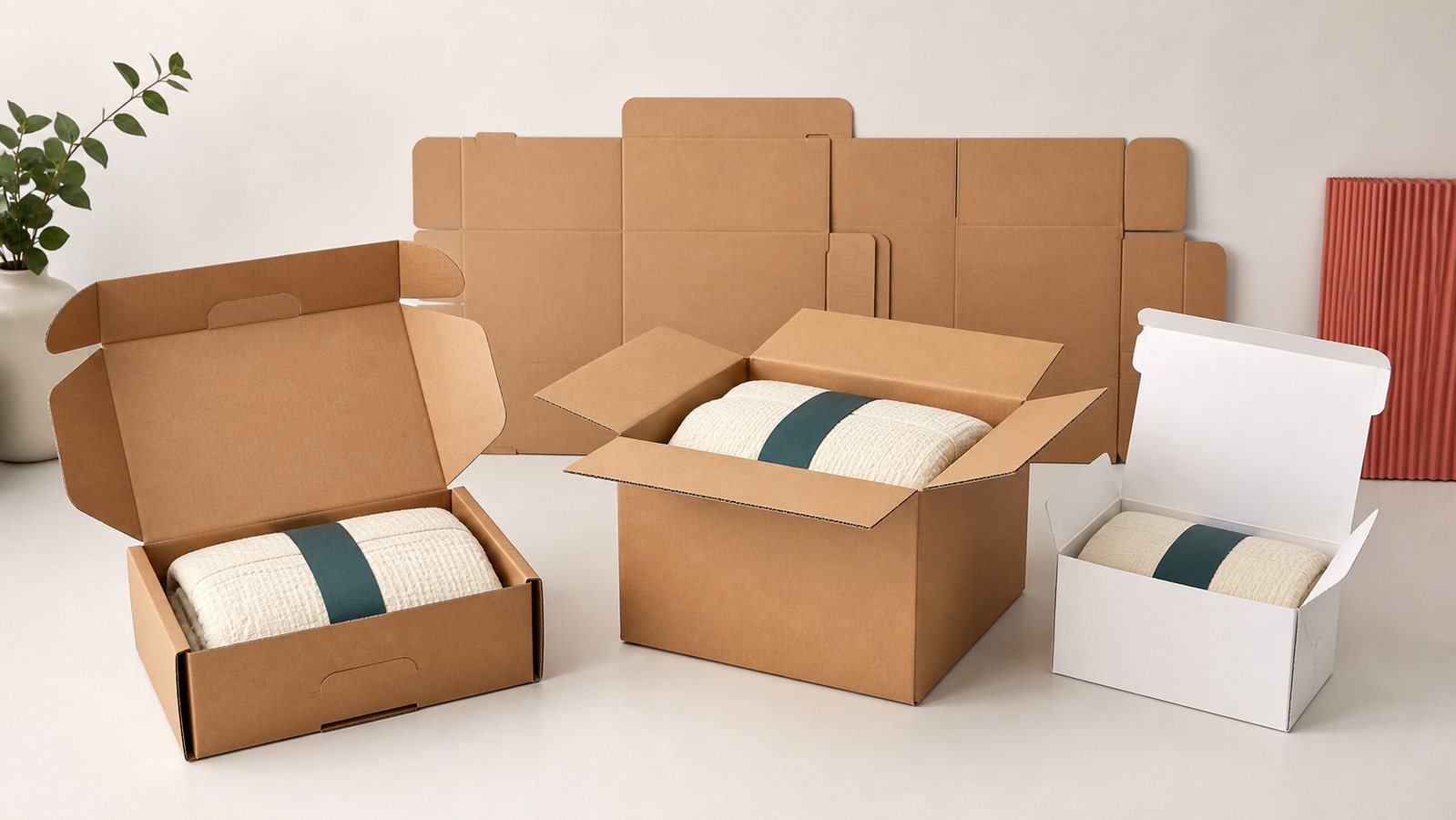
There is no single cheapest structure for every large product. Start with the product's size, weight, fragility, selling channel, and shipping role. Use a corrugated mailer when its locking structure, protection, and unboxing value justify the larger die-cut blank. Check a regular slotted corrugated carton when practical transport protection matters more than a premium reveal. Use a paperboard folding carton only when the product is light enough and another outer package handles delivery. For a low-MOQ launch, a plain right-sized box with tissue, a card, sticker, label, or printed tape can create branding without committing to a large fully printed mailer.
Papyrn packaging team experience
Large packaging inquiries often begin with a product photo and a request for a "mailer box." The requested size may be based on the product's longest points plus generous empty space. Once the mailer is unfolded, its lid, base, side walls, roll-over panels, dust flaps, and locks can create a much larger blank than the assembled footprint suggests. At 200 or 500 pieces, that can change printing, die-cutting, packing, and freight allocation enough to make the original concept unsuitable for the buyer's budget.
Papyrn's low-MOQ strength is mainly in small and medium corrugated mailer boxes and paperboard boxes. Large mailer boxes and large shipping cartons need a separate landed-cost check because material and freight can represent a higher share of the order. This does not mean a large mailer cannot be made. It means the structure should earn its cost through protection, packing efficiency, or customer experience.
1. "Large" is a production and logistics question, not one fixed dimension
A box can become large for production before it looks unusually large to a buyer. Finished length, width, and height affect the complete blank differently for each structure. A shallow mailer may need broad side returns and a full lid. A tall carton may use a narrower blank but create more case volume. Board flute, paper thickness, printing method, equipment limits, flute direction, trim, and nesting can also change the workable format.
For this reason, a supplier should not classify the project from one finished dimension alone. The useful questions are: How large is the flat blank? Can it run on the intended printing and converting equipment? How many blanks fit the working material? How will finished boxes be bundled and exported? What are the packed external dimensions when the seller ships the product?
2. Four structures to compare for a large product
FEFCO groups corrugated packaging into recognized design families, including slotted boxes, folder boxes and trays, ready-glued cases, and retail or ecommerce styles. The comparison below uses buyer-friendly names rather than promising one universal manufacturing route.
Die-cut folder or roll-end structure
Strong unboxing experience and useful protection for suitable ecommerce products
Its flat blank can grow quickly as finished length, width, and height increase; large low-MOQ runs can carry higher die-cut, sheet, packing, and freight costs.
Slotted corrugated case, folded and closed with tape or glue
Outer transport packaging, case packing, and large products where a practical shipping container matters more than a premium reveal
It can be more material- and conversion-efficient than a complex mailer in some projects, but board grade, printing, closure, order quantity, and delivery still need a quote.
Folding carton made from suitable card stock
Lightweight retail products that will travel inside another protective shipping package
It is not a substitute for a corrugated shipper when the product is heavy, fragile, or exposed to parcel handling.
Board components wrapped or assembled into a presentation box
Premium gifts and high-value presentation where the box itself is part of the product experience
Large sizes often bring higher MOQ, manual work, packing volume, and freight. It is rarely the default low-MOQ solution.
3. Why large mailer-box cost can rise faster than buyers expect
The cost increase is not caused by one mysterious "large box fee." Several material, production, and logistics effects can happen together. Their importance changes by design, quantity, equipment, and destination.
The finished box is only the starting point
A buyer sees the assembled length, width, and height. Production must work from the flat blank, including panels, flaps, locks, glue areas, allowances, and trim. A structure with more returning panels can use much more board than its finished footprint suggests.
Large blanks can cross equipment or sheet boundaries
A small change to one finished dimension can move a die-cut mailer into a larger working format. At low quantity, larger printing and die-cutting preparation can be divided across only a few hundred boxes, so the unit-price change may be more visible than the size change.
Complex die-cutting is not the same as slotting
A roll-end mailer normally needs a structure-specific cutting form with multiple cuts, creases, slots, and locking features. A regular slotted carton uses a simpler case format and may follow a different converting route. The practical option depends on factory equipment and order specifications.
Flat packing still takes space
Corrugated boxes are commonly delivered flat, but a larger blank creates larger bundles, export cartons, and pallets. A design that saves one assembly step may still increase the cubic volume of the packaging shipment.
The product shipment has its own dimensional weight
After the ecommerce seller packs the product, carriers can compare actual weight with dimensional or volumetric weight. A large, light package can therefore cost more to ship than its scale weight suggests.
Protection failures also have a cost
Reducing material or changing structure without checking product weight, empty space, edge support, and handling can increase damage. The lowest box price is not economical if it needs excessive filler or fails during delivery.
Use Papyrn's mailer box unfolded-size calculator as an early planning tool. It illustrates why a small finished-size change can cross a larger sheet class. It is not a final dieline, structural approval, or quotation.
4. Large, light products create two different freight problems
First, the packaging itself must travel from the factory to the brand, warehouse, or fulfillment center. Boxes usually ship flat, but large blanks create larger bundles and export cartons. A low-quantity shipment may therefore have an unfavorable freight share even before the product is packed.
Second, the ecommerce seller ships the assembled package to the customer. UPS explains that dimensional weight reflects the space a package occupies compared with its actual weight, and Shopify notes that carriers use package dimensions and weight to calculate rates. The exact divisor and surcharge rules vary by carrier, service, account, origin, and destination. The practical lesson is stable: confirm the assembled outside dimensions, not only the product weight.
Large-package landed-cost check
Packaging production + samples + export packing + international delivery + warehouse handling + assembly + filler or inserts + expected outbound parcel cost
5. Practical starting points by product situation
First check whether the product can be folded or compressed. Compare a right-sized corrugated shipper, suitable flexible mailer, or simple carton before specifying a large premium mailer box.
Start with protection: corrugated outer case, controlled clearance, and tested inserts or cushioning. A presentation box can sit inside the transport pack rather than carry the full shipping load.
A paperboard folding carton may be suitable when the product is light and the carton travels inside an outer shipper. Confirm board thickness, bottom structure, and stacking before approval.
A mailer box may be justified when the open-box layout, inserts, and repeatable presentation matter. Compare the unfolded blank and export packing before finalizing the size.
Consider a plain corrugated box with a printed sticker, tape, tissue paper, insert card, or label system. This can test product fit and delivery before investing in a large fully printed die-cut structure.
Separate the consumer-facing unit from the master shipping carton. Confirm barcode, unit preparation, case packing, warehouse labels, carton size, and current receiving requirements before production.
These are starting points, not structural approvals. Product value, center of gravity, edge sensitivity, stacking, moisture exposure, drop risk, and warehouse requirements can change the recommendation.
6. A six-step decision process for large custom packaging
Send the product length, width, height, weight, photos, and any fragile or projecting parts. Confirm whether those dimensions are measured with the product in its final retail condition.
Decide whether it is a retail carton, an unboxing box, the parcel's outer shipping container, an Amazon-ready unit, or a master carton. One box does not need to perform every role.
Allow the clearance required for packing, inserts, and protection, but avoid adding volume only for visual impact. Empty space increases board, filler, export volume, and potentially last-mile dimensional weight.
Ask for the same product, quantity, print coverage, destination, and protection target to be compared as a mailer box and a simpler suitable alternative. Otherwise the apparent price difference may come from changed assumptions.
Review packaging price, sampling, export carton packing, international freight, warehouse handling, assembly time, filler, and the product shipment's expected dimensions.
For a large box, check product fit, panel bowing, lock performance, closure, stacking, handling, print result, and carton packing. A screen mockup cannot confirm physical strength.
7. What should a large-box sample confirm?
A digital rendering can show artwork placement, but it cannot confirm whether the product fits, whether a long panel bows, whether a lock opens during handling, or whether the completed package creates too much empty space. A structural white sample is useful before artwork is finalized. A printed digital or machine sample may be needed when material, color, lamination, mounting, or production alignment is important.
Check the product in the box, not the empty box alone. Review loading direction, clearance, insert fit, filler quantity, closure, opening force, lifting, stacking, master-carton packing, barcode visibility, and the final external dimensions. Shipping and warehouse rules can change, so Amazon and 3PL sellers should confirm current requirements for their product and destination before mass production.
8. What to send for a useful large-packaging recommendation
A supplier cannot compare structures accurately from "I need a large custom box." Send the same confirmed information for every option so the recommendation does not hide changed materials, quantities, or delivery assumptions.
Large product packaging checklist
- Product name, photos, finished dimensions, and weight
- Whether the product can fold, compress, nest, or ship in parts
- Required protection, fragile areas, and current damage concerns
- The packaging role: retail box, unboxing box, outer shipper, master carton, Amazon, or 3PL unit
- Target inside dimensions, if already tested, or permission for the supplier to suggest them
- Quantity for each size and each artwork version
- Preferred structure and at least one acceptable alternative
- Material, printing side, ink coverage, lamination, and finishing requirements
- Insert, tissue, filler, sticker, label, tape, or card requirements
- Destination country, postal code, DDP or warehouse delivery request, and target timeline
9. External references for structure and shipping planning
Use carrier and marketplace sources for current shipping limits, dimensional-weight rules, barcodes, labels, and preparation requirements. Use the packaging supplier to translate the product brief into a manufacturable structure and sample plan.
Reviewed by Papyrn packaging team. Updated August 16, 2026. This guide provides planning principles for large ecommerce and retail packaging. It is not a structural certification, carrier quote, marketplace compliance guarantee, or fixed price formula. Final structure, material, MOQ, sample method, production time, packing, freight, and delivery route depend on the confirmed product, dimensions, weight, artwork, quantity, destination, warehouse rules, and current production arrangement.
FAQ
Large custom packaging questions
Why can a large mailer box cost much more than a slightly smaller one?
The finished dimensions affect the complete flat blank. A small size increase can enlarge several panels and flaps, move the blank into a larger production format, increase die-cutting preparation, and change export carton volume. Low quantities feel these changes more strongly because setup is allocated across fewer boxes.
Is a regular shipping carton always cheaper than a mailer box?
No. A slotted shipping carton can be a simpler structure, but cost still depends on size, board grade, printing, quantity, closure, converting method, packing, and destination. Compare both structures using the same product and delivery assumptions.
Can I use a paperboard box for a large product?
Sometimes, when the product is lightweight and the paperboard carton is mainly for retail presentation inside another shipping package. Large, heavy, fragile, or direct-shipped products normally need a corrugated transport solution or another tested protective structure.
What is the cheapest way to brand a large low-MOQ package?
A plain right-sized corrugated box combined with a custom sticker, printed tape, tissue paper, insert card, or label can be a practical test. The best option depends on the box surface, quantity, packing method, and desired customer experience.
Does a smaller box always reduce shipping cost?
A right-sized box often reduces board, filler, and volume, but shipping rates also depend on carrier rules, actual weight, dimensional weight, service, destination, and surcharges. Confirm the packed external dimensions with the intended carrier or fulfillment partner.
Should a large custom box be sampled before mass production?
Yes. A physical sample is important for checking product fit, strength, panel movement, closure, stacking, insert fit, packing efficiency, and the assembled external dimensions. The required sample method depends on the material, print, finish, and risk level.