Short answer
Mailer box or tuck top lock bottom box?
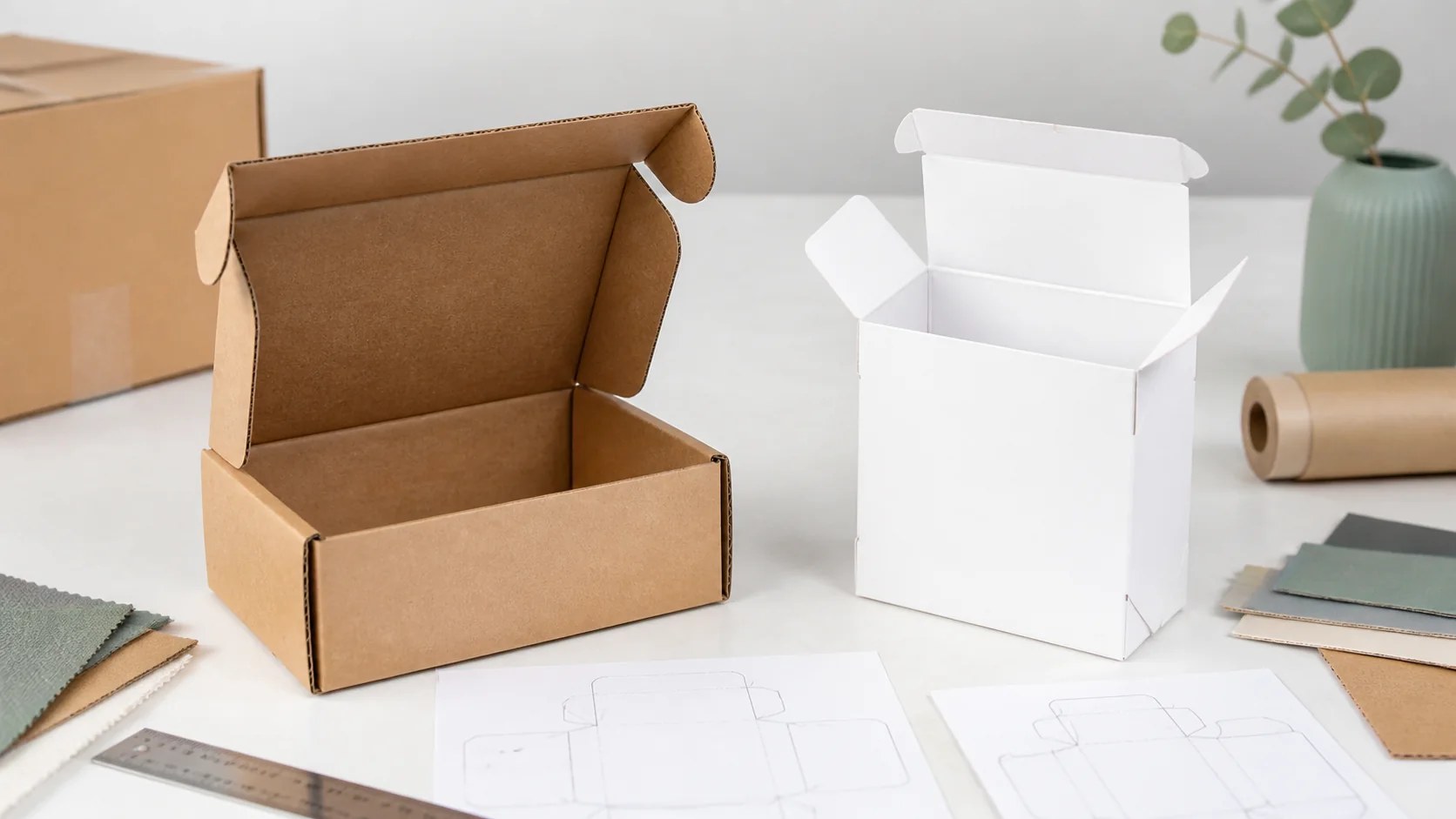
Choose a mailer box when the package needs stronger ecommerce handling, a fuller unboxing experience, or a corrugated structure that may serve as the outer shipping package. Choose a tuck top lock bottom box when the product is lighter, the package is mainly for retail presentation, and the box will usually be protected by an outer carton, mailer bag, or fulfillment packing. For large sizes or low-MOQ launches, compare material use, unfolded size, carton volume, and freight before choosing the structure.
Papyrn packaging team experience
Many buyers ask for a "paper box" quote without realizing that mailer boxes and tuck top lock bottom boxes are different structures. They can have similar finished length, width, and height, but their flat layouts, material use, die-cutting area, strength, packing method, and shipping cost can be very different. In this guide, "mailer box" refers to a corrugated tuck-top mailer or roll-end style ecommerce box, while "tuck top lock bottom box" refers to a folding paperboard box with a tuck top and auto/lock bottom structure.
Papyrn usually treats this as a structure decision before it becomes a printing decision. For small ecommerce brands, choosing a box style too early can create unnecessary cost, especially when the order is 200 pcs, 500 pcs, or another small-batch test.
1. Quick comparison: mailer box vs tuck top lock bottom box
This table gives a practical starting point. Final choice still depends on product size, weight, shipping route, artwork, and quantity.
Mailer box: Ecommerce shipping, subscription boxes, PR kits, and products that need a stronger corrugated structure.
Tuck top lock bottom box: Retail product packaging, lightweight products, cosmetics, candles, accessories, and display-friendly paperboard packaging.
Mailer box: Corrugated board, or white card paper mounted to corrugated board when a cleaner printed surface is needed.
Tuck top lock bottom box: Usually 250-400g white card paper, kraft paper, or specialty paperboard depending on product weight and finish.
Mailer box: Better structure for direct ecommerce handling, especially when the box may travel as the outer package.
Tuck top lock bottom box: Good for product presentation, but usually not enough as the only shipping package for fragile or heavier ecommerce products. It often needs an outer carton, mailer, padded mailer, or fulfillment packing.
Mailer box: Usually uses more flat paper area than a simple paperboard box, especially as length, width, and height increase.
Tuck top lock bottom box: Often more material-efficient for many small retail products, but strength depends on material thickness and product weight.
Mailer box: Large sizes can become expensive because unfolded size, sheet class, fixed setup fees, and freight all increase.
Tuck top lock bottom box: Can be more cost-efficient for lightweight products, but small orders still carry printing, die-cutting, sample, and setup costs.
Mailer box: Good for full unboxing experience: outside print, inside print, tissue paper, filler, insert card, sticker, and QR card.
Tuck top lock bottom box: Good for shelf presentation, front panel design, ingredient/product information, labels, and compact brand display.
2. When a mailer box is usually the better starting point
A mailer box is often the better choice when the box has to protect the product and create a strong unboxing moment at the same time. Most small and medium custom mailer boxes use corrugated board, or white card paper mounted to corrugated board when a cleaner print surface is needed.
- The product needs stronger side walls or more shipping protection.
- The box may be used as the outer ecommerce shipping package.
- The brand wants a full unboxing experience with tissue paper, filler, inserts, or inside printing.
- The product is sold as a set and needs a stable layout inside the box.
- The finished box size is still practical for carton packing and overseas freight.
3. When a tuck top lock bottom box may be more practical
A tuck top lock bottom box is usually a paperboard product box. It can be a good fit for cosmetics, candles, accessories, small retail products, and lightweight ecommerce items that are shipped inside a second protective package. Papyrn commonly checks this style with 250-400g white card paper, depending on size and product weight.
- The product is light or medium weight and mainly needs product presentation.
- The box will usually be packed inside an outer shipping carton or mailer bag.
- The brand needs a compact paperboard box for retail, Amazon, Etsy, or DTC orders.
- The buyer wants to reduce paper use compared with a mailer box for a suitable product.
- The front panel, side panels, barcode, ingredient text, or label space matter more than a full unboxing structure.
4. Why the cheaper box is not always obvious
Buyers often expect the cheaper box to be obvious from the finished size. In practice, the factory has to check the flat layout, material grade, printing side, finishing, die-cutting, packing, and freight. A mailer box can use more paper but provide better shipping structure. A tuck top lock bottom box may use less material in some sizes, but it is not always cheaper after checking structure, printing, quantity, packing, and freight. It may also need an outer carton, mailer bag, padded mailer, or fulfillment packing for delivery.
Product weight and fragility
A fragile, heavy, or irregular product may need a stronger mailer box, extra filler, or inner support. A light product can often use a tuck top lock bottom box when it is shipped inside another outer package.
Shipping role
If the box is expected to travel as the outside package, structure and edge strength matter. If it is mainly a retail product box, a paperboard structure can be more practical.
Finished size and flat layout
Two boxes with similar inside dimensions may have very different unfolded sizes. For mailer boxes, small finished-size changes can push the flat layout into a larger sheet class.
Quantity and fixed setup cost
Small orders divide printing setup, die-cutting setup, sampling, checking, and packing preparation across fewer pieces. This makes structure choice more important at 200 pcs or 500 pcs.
Freight and carton packing
A structure that looks stronger may also create larger shipping cartons. For overseas ecommerce packaging, landed cost should include product cost and freight impact.
Branding priority
A mailer box supports a richer unboxing moment. A tuck top lock bottom box can be cleaner and more compact when the package needs product information, barcode, and retail display panels.
5. Large sizes need a separate cost check
For low-MOQ orders, large mailer boxes can become expensive quickly. The finished length, width, and height affect the unfolded layout. Once the flat layout crosses into a larger sheet class, fixed printing and die-cutting setup costs can rise, and carton volume can also increase the delivered cost.
A large mailer box may look premium, but the unfolded size and carton volume can raise cost quickly. Check whether a simpler carton, paperboard box, sleeve, or outer shipping carton is more practical.
A tall mailer box can use a large flat layout. A tuck top lock bottom box or other paperboard structure may reduce material use if the product does not need the mailer box as the outer shipping package.
Confirm carton packing, label needs, carton weight, and warehouse requirements before choosing the final structure. The best product box is not always the best shipping unit.
For early testing, a plain box with a custom sticker, insert card, or printed tissue paper can sometimes be a better first step than a large fully printed mailer box.
This is why Papyrn may not automatically recommend a mailer box for every large product. Large-size projects should be checked case by case instead of choosing by box name only. Sometimes a different paperboard box, shipping carton, or branded sticker plan can be a more practical first order.
6. What to send before asking which box style to choose
If you are unsure whether to choose a mailer box or tuck top lock bottom box, send these details first. A supplier can then compare structure, material, carton packing, and delivery route before quoting.
Structure recommendation checklist
- Product size, product weight, and product photos
- Whether the box is for direct shipping, retail packaging, Amazon FBA, 3PL, or DTC delivery
- Target inside box size if known, or request a size suggestion
- Quantity per size and per artwork design
- Preferred structure: mailer box, tuck top lock bottom box, or open to suggestion
- Material preference: corrugated board, white card paper, kraft paper, or not confirmed yet
- Printing plan: unprinted, outside printing, inside printing, two-side printing, or sticker branding
- Destination country, zip code, Amazon warehouse, DDP, 3PL, or door-to-door needs
7. A practical decision rule for small brands
If the box must protect the product during direct ecommerce handling, start by checking a mailer box. If the box mainly presents the product and will be packed inside another outer package, check a tuck top lock bottom box or another paperboard structure first. A tuck top lock bottom box is usually not enough as the only shipping package for fragile or heavier ecommerce products. If the product is large, low-MOQ, or going to an Amazon warehouse, check product cost and freight together before confirming the final style.
8. Useful external references for shipping and marketplace planning
Shipping and marketplace rules can affect box size, carton packing, labels, and final landed cost. Buyers should check the latest platform, carrier, and warehouse requirements before approving a final packaging structure.
Reviewed by Papyrn packaging team. Updated August 11, 2026. This guide is written for overseas ecommerce buyers comparing custom mailer boxes and tuck top lock bottom paperboard boxes. Final box choice, MOQ, price, sample timing, production timing, and shipping options depend on confirmed product size, product weight, box size, material, artwork, finish, quantity, destination, carton packing, and current production workload.
FAQ
Mailer box vs tuck top lock bottom box questions
What is the difference between a mailer box and a tuck top lock bottom box?
A mailer box is usually a corrugated ecommerce box with a stronger folding structure for shipping and unboxing. A tuck top lock bottom box is usually a paperboard product box with a locking bottom, often used for retail presentation and lightweight products.
Which box is better for low-MOQ small brand packaging?
There is no single best structure for every low-MOQ project. A tuck top lock bottom box may use less material in some sizes, but it is not always cheaper after checking structure, printing, quantity, packing, and freight. A mailer box may be better when shipping protection and unboxing experience matter.
Should I use a mailer box for a large product?
Not always. Large mailer boxes can become costly because unfolded size, sheet class, carton volume, and freight increase. For some large or low-MOQ projects, a simpler shipping carton, paperboard box, or plain box with branded sticker may be more practical.
Can a tuck top lock bottom box be used for shipping?
It can be shipped when packed inside an outer carton, mailer bag, or suitable protective packaging. It is usually not the best standalone outer shipping package for heavier or fragile products unless the full shipping method is tested and confirmed.
What should I send before asking which box style to choose?
Send product photos, product size, product weight, target quantity, selling channel, delivery route, artwork plan, and destination. These details help the supplier compare mailer box, tuck top lock bottom box, and other packaging options more accurately.