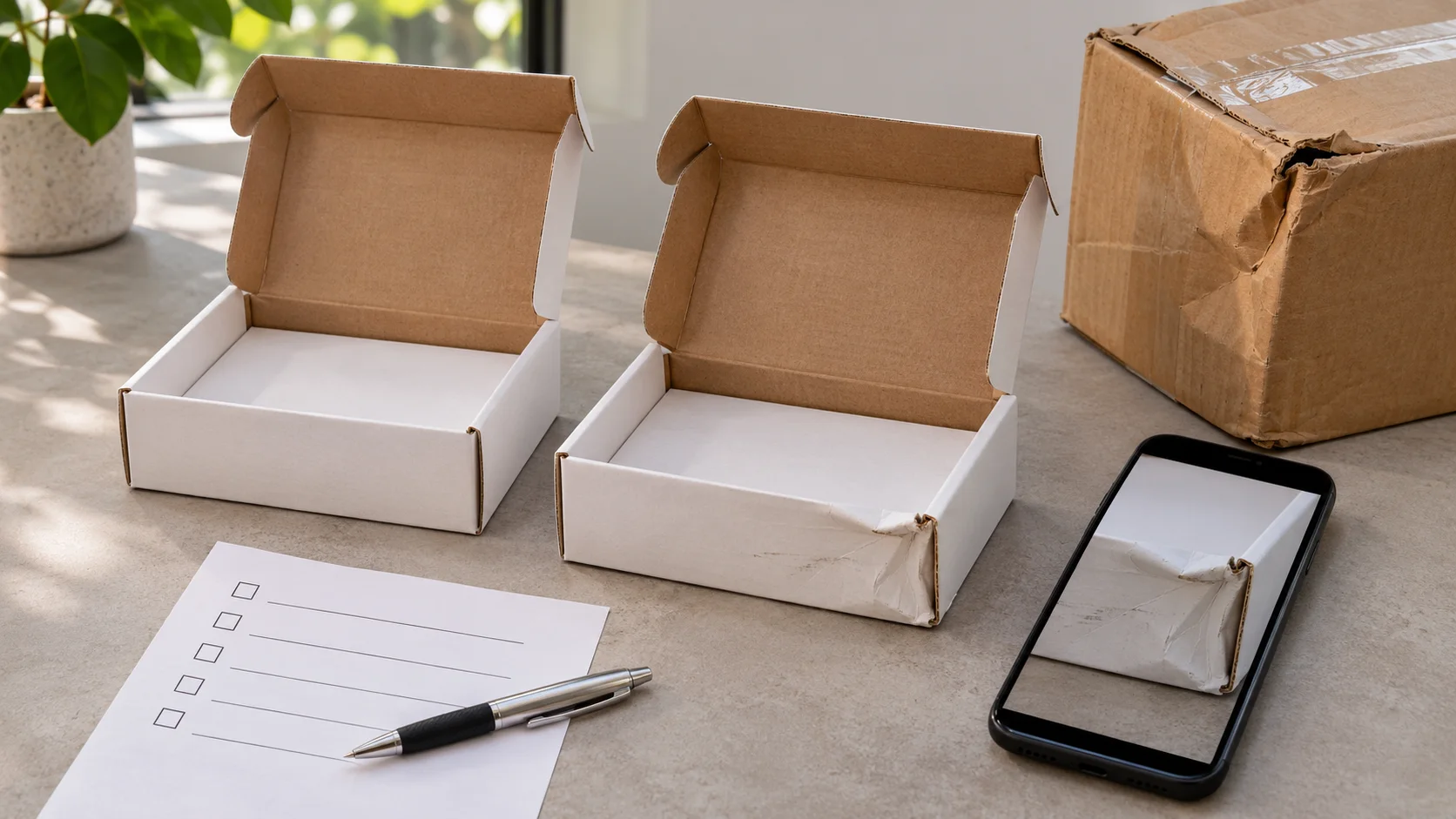
Short answer
Record first, diagnose second, agree on a remedy third
If packaging arrives damaged or appears different from the approved specification, keep the affected goods and shipping materials, document the issue, and tell the supplier promptly. State the quantity checked and quantity affected, not just that the "whole order has a problem." Compare the evidence with the approved artwork, physical sample and written tolerances. The appropriate resolution depends on the confirmed cause and usable quantity; it should not be promised before those checks.
1. Collect a useful evidence set
Before repacking, disposing of cartons or mixing batches, put the questionable pieces aside. Send the supplier a concise record:
- Order number, product or artwork version, delivery date and carton or batch identifiers, if present.
- Total pieces received, pieces inspected, pieces with the issue and how the count was made. If only some cartons were opened, say so.
- Clear overall and close-up photos or short videos showing the defect, its location and a normal piece for comparison.
- Photos of the outer carton, inner packing, shipping label and waybill if transit damage is possible.
- The approved sample or agreed specification being used as the reference, plus a description of how the issue affects packing, sale or use.
For suspected freight damage, preserve the packaging until the carrier or forwarder tells you the claim no longer needs it. For example, FedEx Logistics' claim form asks for photos of damaged packaging and contents and says to retain the merchandise and packaging while the claim is unresolved. Your own carrier's requirements and deadlines may differ, so confirm them for the shipment.
2. Separate the likely causes
Photographs show what happened, but not always where it happened. The supplier should review the evidence with the order team and production team before assigning a cause.
Approved sample, production order, retained sample, process records and pre-shipment photos when available
Is the issue repeated across cartons or limited to a process step or batch?
Outer and inner carton damage, labels, waybill, arrival photos and affected carton positions
Ask the forwarder what claim evidence and timing apply.
Approved files, written dimensions, tolerances, physical sample and intended packing method
Did the delivered product differ from approval, or were expectations never defined the same way?
A crushed corner after a visibly damaged carton is a different investigation from the same print error on every box in intact cartons. A color concern also needs a physical reference and the agreed printing conditions. See our guides to sample types and print-color proofing.
3. Agree on a response for the verified impact
Once the affected quantity and cause are understood, discuss what the buyer actually needs and what can be delivered. Depending on severity and timing, options may include sorting or rework, remaking and reshipping affected pieces, a partial refund or credit, or another mutually agreed solution. A cosmetic issue that does not prevent use may call for a different response from a fit failure that stops products being packed.
Keep the agreed quantity, remedy, timing and responsibility in writing. If the shipment is needed for a launch, distinguish the number of unusable pieces from the number the customer can still pack. Neither a full-batch refund nor a replacement of only a photographed sample should be assumed without confirming the affected scope.
4. Close the loop for the next order
After the immediate issue is resolved, record the cause and corrective action in the customer and production records. Depending on the finding, that could mean revising a packing method, making a dimension or print tolerance explicit, checking a particular production stage more closely, or clarifying which physical sample controls approval. Share the finding with the production team so the next batch is not treated as a fresh, unrelated order.
Before approving the next run, confirm critical fit, artwork and finish in writing. A physical box fit test is especially useful when a closure tab or irregular product shape can make a nominal inside dimension misleading.
Published November 11, 2026. This is a practical buyer checklist, not a promise of a particular refund, insurance outcome or carrier claim. The applicable order terms, approved standard and shipping service determine the final process.