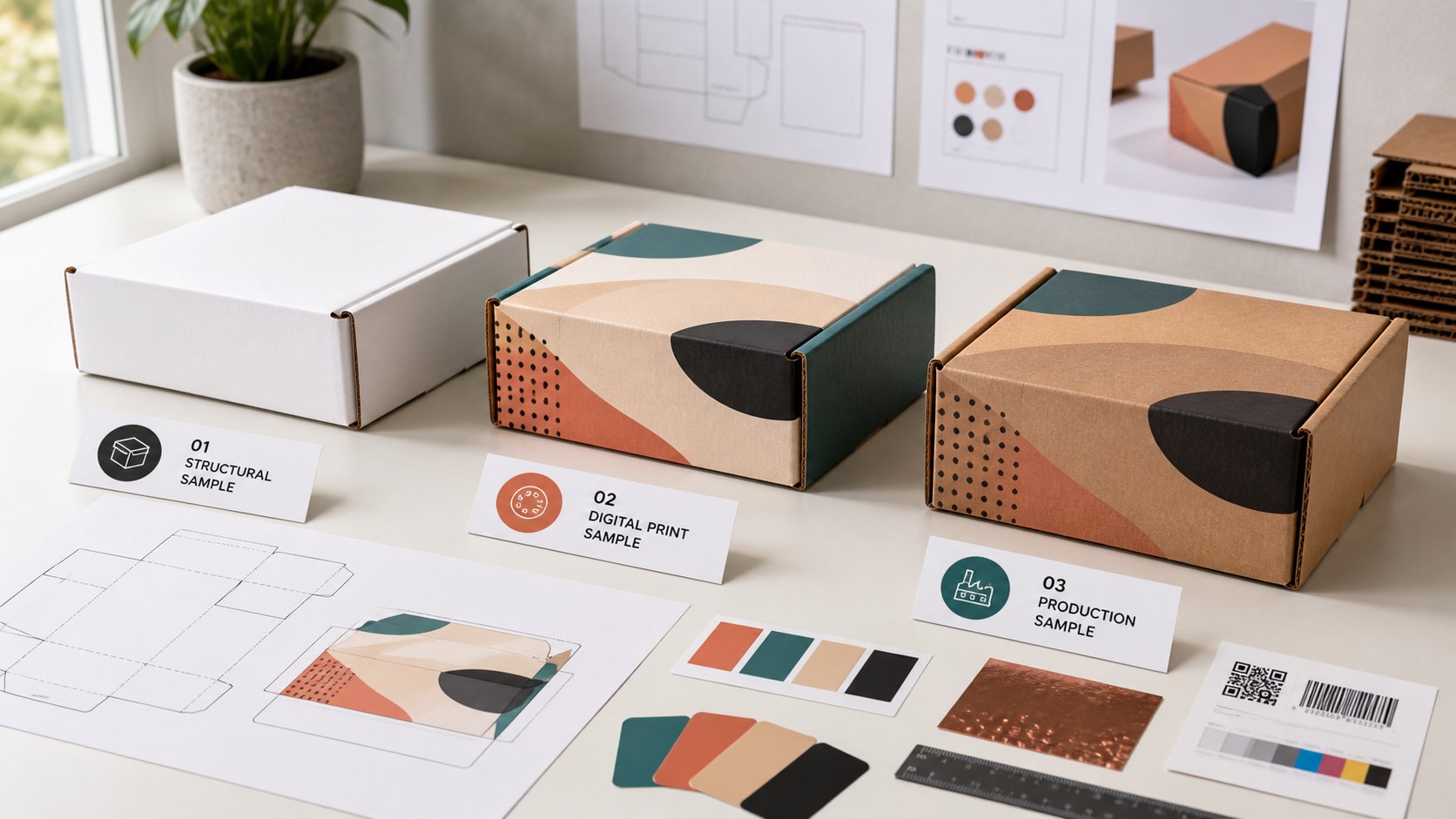
Short answer
Which custom packaging sample should you choose?
Use an electronic proof to approve files, a white structural sample to confirm size and product fit, a digital printed sample to review structure and general artwork placement, and a machine or production-method sample when final material behavior, printing, mounting, color, or special finishing creates higher risk. Not every order needs the most expensive sample. Choose the lowest-cost sample that can answer the decision you must make before mass production.
Papyrn packaging team experience
Buyers often ask whether a sample is necessary before they have defined what must be approved. This can lead to two opposite problems: paying for a machine sample when only the box fit is uncertain, or approving a low-cost digital sample as if it guarantees final offset color, foil, lamination, and mounted construction.
The better approach is to list the production risks first. If the product may not fit, start with structure. If the structure is proven but artwork orientation is new, review the proof and a digital printed sample. If brand color, special finishing, double-side printing, or material construction is critical, confirm a sample made with the relevant production method.
1. Four packaging proof and sample types
Artwork version, spelling, panel direction, dimensions, print sides, colors named in the file, barcode data, QR destination, and finishing layers.
Physical size, board strength, folding, actual paper color, print color, coating, foil, or product fit.
Finished size, structure, product fit, closure, opening sequence, insert fit, assembly, and empty space.
Printed color, ink coverage, lamination, foil, spot UV, and final decorated appearance.
Structure plus general artwork placement, image scale, visual balance, copy size, and an approximate color direction.
An exact match to offset printing, final production paper, special finishes, mounting behavior, or bulk-run tolerance.
A result closer to the intended material, printing, lamination, mounting, die-cutting, foil, UV, or other production process.
A guarantee that every bulk piece will be visually identical or that later material and process changes will have no effect.
Ask the supplier to state the sample material, printing process, finishing process, and differences from the intended bulk production. “Printed sample” is not specific enough because two samples can look similar in a photo while representing different production methods.
2. When is a physical sample worth the cost?
New box structure or uncertain product fit
Use a white structural sample before final artwork. It is cheaper to correct dimensions, closure, or insert fit before a decorated sample is made.
Full-coverage color or two-side printing
Use a printed physical sample when paper color, ink coverage, inside-to-outside alignment, lamination, or mounted construction affects the result.
Foil, spot UV, embossing, or special coating
A PDF cannot show real reflectivity, height, texture, registration, or how a finish behaves across a fold. Confirm the appropriate production-method sample.
Barcode, QR code, or marketplace packaging
Test the printed code and final assembled packaging in the intended workflow. A code that works on a monitor is not proof that it will scan after production.
Simple repeat order with no changes
A full new physical sample may not be necessary when the approved material, structure, artwork, process, and supplier remain unchanged, but confirm the current production reference in writing.
Low-value, low-risk printed insert
A carefully reviewed electronic proof may be enough for a simple card or label when exact color, fit, finish, and regulatory risk are not critical.
Simple decision rule
Cost of the sample + sample shipping + added time should be compared with the cost of correcting the full order, missing a launch, or receiving packaging that does not fit.
3. How long do custom packaging samples take?
Timing begins after the required size, structure, material direction, artwork, and sample method are sufficiently confirmed. Revisions restart part of the process, so an incomplete file can create more delay than the actual sample production.
About 3 days
After size, structure, material direction, artwork, and sample method are confirmed.
About 7 days
Useful for checking the assembled box, artwork position, and general appearance.
About 10 days
For a closer production-process reference when material, color, mounting, or finish matters.
Additional time may be needed
Foil stamping, spot UV, embossing, special coatings, complex inserts, and material sourcing can extend the schedule.
These are Papyrn planning references, not guaranteed completion dates. Quantity, artwork changes, material availability, color matching, finishing, drying or curing, shipping, holidays, and factory workload can change the schedule. For mailer-box-specific MOQ and production planning, use the mailer box MOQ, sample, and lead-time guide.
4. Approve structure before decoration when fit is uncertain
A photorealistic rendering can make a package look finished without proving that the product fits. Measure the actual production item, including accessories, protective bags, cables, manuals, and expected tolerances. Then test the packaging in the intended orientation.
For boxes, check inside dimensions, closure, panel movement, insert fit, assembly steps, packing speed, product movement, empty space, and the completed outside dimensions. For a mailer box, also confirm whether the lid, dust flaps, and front locks move cleanly after the product and filler are added.
5. A printed sample is not an unlimited color guarantee
Color is affected by paper color, surface texture, board construction, ink, printing process, coating, lamination, lighting, and camera or screen display. A digital sample can show general direction but may not reproduce the same dots, ink density, surface, or color behavior as a production press.
When color is critical, identify the agreed reference, specify which surfaces matter most, and confirm the appropriate sample method. Discuss reasonable production tolerance instead of assuming every bulk piece will be visually identical to one sample. The custom packaging artwork guide covers color references, dielines, bleed, fonts, barcodes, and proof approval in more detail.
6. Custom packaging sample approval checklist
Before written approval
- Compare the finished inside dimensions with the approved specification, not only the outside appearance.
- Place the real product, inner tray, tissue, filler, cards, and accessories inside the sample.
- Open, close, fold, lock, and assemble the packaging in the same way the packing team will use it.
- Check every panel for spelling, version, language, logo direction, legal copy, care instructions, and contact details.
- Scan printed QR codes and barcodes after printing, lamination, folding, and final assembly.
- Review important colors under consistent lighting and against the agreed physical or named color reference.
- Confirm matte or gloss lamination, foil position, spot UV, embossing, coating, and any inside-versus-outside finish.
- Record all requested changes in one written list and approve one clearly named final sample or proof version.
Photos and chat messages are useful for discussion, but final approval should identify the approved dimensions, material, artwork version, printing sides, colors, finishes, and sample reference. A clear record protects both buyer and supplier from approving different versions.
7. Product-specific sample checks
Inside size, lid movement, dust flaps, lock, crease lines, product fit, empty space, board feel, artwork orientation, and shipping volume.
Product fit, bottom lock, tuck friction, glue position, crease quality, print direction, coating, and whether the filled carton stays square.
Paper color, 17 gsm transparency, ink contrast, repeat-logo size, spacing, folding appearance, rub behavior, and interaction with the product below.
Finished size, copy, language version, font size, trim safety, surface finish, QR destination, and scan performance.
Finished shape, adhesive, surface compatibility, peel behavior, application position, print clarity, and barcode or QR performance.
8. What should a sample quotation include?
Sample cost should be separated from bulk product cost and sample shipping unless the quotation clearly combines them. Confirm the sample type, number of samples, material, printing, finishing, expected timing, shipping method, destination, and whether later artwork revisions require a new sample.
Do not assume the sample fee is refundable or credited to the bulk order unless that term appears in the quotation. A machine sample can carry setup costs that are not comparable with the eventual bulk unit price. Likewise, an inexpensive digital sample should not be described as a full production-process proof.
9. A practical approval sequence for small brands
- Confirm product dimensions, packaging structure, finished size, material direction, and intended packing method.
- Approve the dieline and electronic proof, including artwork version, panel direction, print sides, and finishes.
- Use a white sample first when product fit, closure, assembly, or insert construction is uncertain.
- Choose a digital printed or machine sample based on the remaining visual and production risks.
- Test the physical sample with the real product and document one consolidated revision list.
- Approve one clearly identified final reference before bulk production begins.
Reviewed by Papyrn packaging team. Updated September 2, 2026. This guide provides planning references for custom packaging samples. It does not guarantee a fixed sample fee, completion date, exact screen-to-print color match, zero production variation, barcode acceptance, marketplace compliance, or bulk result. Final sample method, timing, cost, material, color reference, finish, tolerance, shipping, and approval scope depend on the confirmed product, packaging structure, artwork, destination, and current production arrangement.
FAQ
Custom packaging sample questions
Do I need a physical sample before ordering custom packaging?
A physical sample is recommended when size, product fit, structure, color, material, finish, code scanning, or assembly creates meaningful risk. A simple repeat order or low-risk insert may sometimes proceed from an approved electronic proof, but the decision should reflect the cost of a bulk-production mistake.
What is the difference between a white sample and a printed sample?
A white structural sample is mainly for size, fit, folding, closure, assembly, and insert checks. A printed sample adds artwork placement and general visual review. It may still use a different printing method or material from the final bulk run, so confirm what the sample represents.
What is the difference between a digital sample and a machine sample?
A digital printed sample is usually faster and useful for structure, artwork position, and general appearance. A machine or production-method sample is closer to the intended production process and is more appropriate when exact material behavior, printing, mounting, or special finishing matters.
How long does a custom packaging sample take?
As Papyrn planning references, paperboard box digital samples may take about 3 days, corrugated box digital samples about 7 days, and machine samples about 10 days after the main details are confirmed. Special finishes, material sourcing, artwork changes, and factory workload can extend the timing.
Will the bulk order look exactly the same as the sample?
The approved sample is an important production reference, but normal production variation can still occur across paper, board, ink, coating, lamination, mounting, die-cutting, and finishing. The sample method, acceptable tolerance, and critical approval points should be agreed before bulk production.
Does approving a PDF guarantee the printed color?
No. Screens, office printers, paper color, ink, coating, lamination, and production method affect physical color. Use an agreed physical or named color reference and the appropriate printed sample when color is important.
Should QR codes and barcodes be tested on the sample?
Yes. Test the printed code at final size and after the intended coating, lamination, folding, and assembly. Use the relevant devices, marketplace rules, carrier workflow, or retailer requirements rather than relying only on a screen preview.
What information is needed to quote a custom packaging sample?
Send the packaging type, finished size, product size and weight, quantity, material, printing sides, artwork, colors, finishes, sample purpose, destination, and target date. State whether you need a white sample, digital printed sample, or production-method sample.