Short answer
What should a small ecommerce brand choose first?
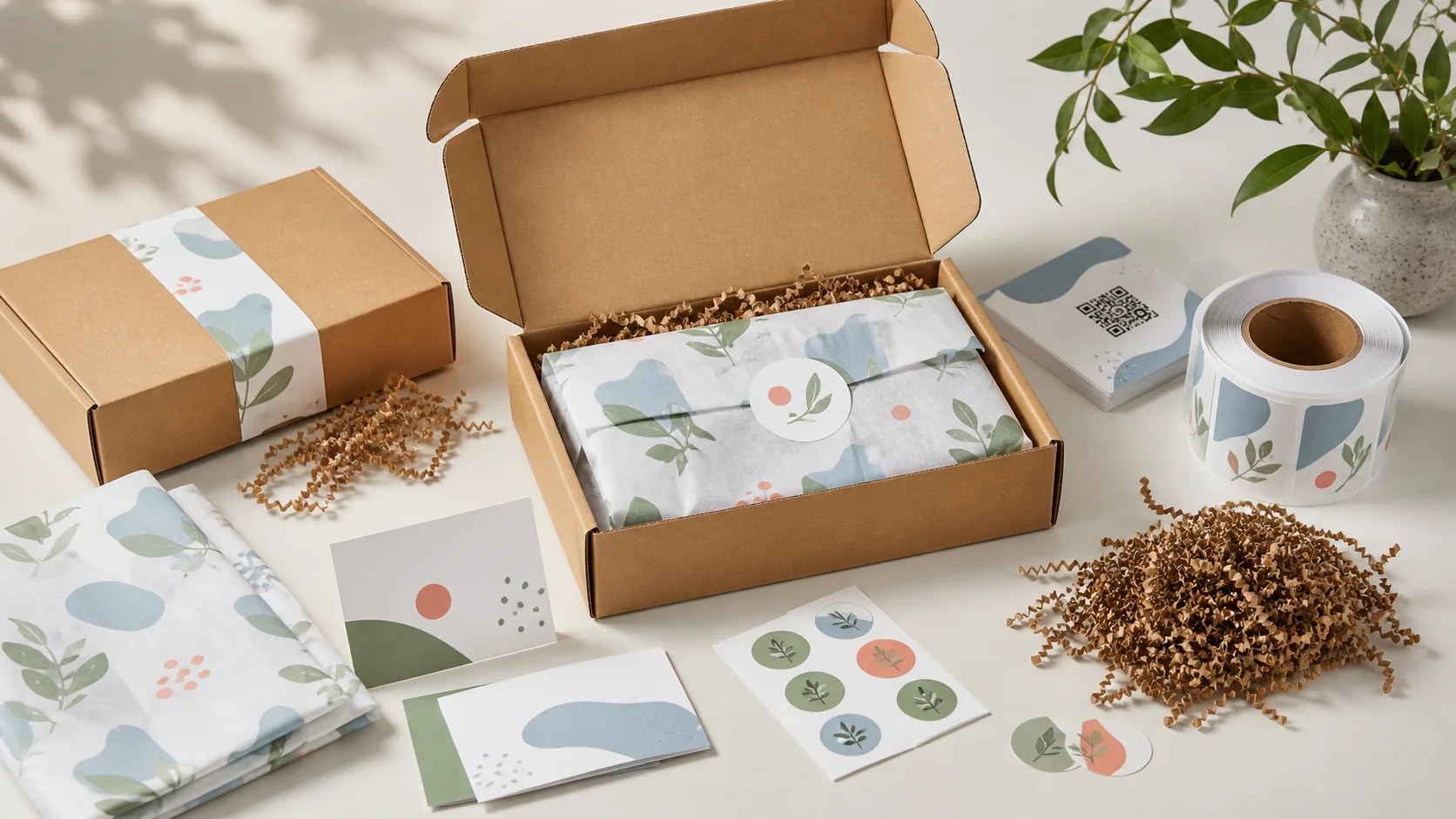
Start with the correct outer box for your product size and shipping route. For many small brands, that means a small or medium custom mailer box or a paperboard box. Then add printed tissue paper, a thank-you card, a QR card, a sticker, or paper filler only where it supports the buyer experience and budget.
Papyrn packaging team experience
In small-brand packaging projects, one of the most common mistakes is choosing a beautiful box before checking shipping volume weight. For overseas orders, a slightly larger box can increase freight cost more than the printing cost itself. That is why Papyrn usually checks product size, box structure, quantity, and destination before recommending decoration.
The MOQ and timing ranges in this guide are based on Papyrn's current small-batch packaging direction. They may vary by size, material, artwork, finish, season, and factory workload.
1. Define the product before choosing packaging
Packaging is not chosen by style first. It is chosen by product size, product weight, fragility, shipping distance, and brand position. A candle brand may need stronger box structure and filler. A jewelry brand may need a compact box, card insert, and sticker. An apparel seller may need a mailer box or shipping bag with printed tissue paper inside.
Before asking for a quote, prepare the finished product size, weight, target country, estimated order quantity, and photos of the product. This makes the supplier's recommendation more accurate and reduces back-and-forth.
If your product is fragile, choose protection first. If your product is soft or lightweight, choose presentation and shipping efficiency first.
2. Use this small brand packaging checklist
Start with product size, weight, and fragility
A light apparel order, a candle jar, a jewelry box, and a skincare set should not use the same packaging plan. Measure the product first, then decide whether you need a mailer box, paperboard box, filler, tissue wrap, or inserts.
Choose the outer box before decoration
The outer box controls protection, shipping cost, and buyer perception. For many small and medium ecommerce shipments, custom mailer boxes are often a practical first option because they balance branding, structure, and export practicality.
Add one or two low-cost branded details
Printed tissue paper, a thank-you card, a QR card, or a box sticker can improve the unboxing experience without forcing the brand into a high-MOQ rigid box.
Plan shipping early
For overseas buyers, freight can change the real unit cost. Ask whether DDP delivery, Amazon warehouse delivery, or door-to-door shipment is available before approving a packaging structure.
3. Match each packaging item to its job
A complete ecommerce packaging set can include a box, tissue paper, filler, insert card, sticker, seal, and label. But small brands do not need every item on day one. A better plan is to choose the items that solve a clear job.
Best first choice for small and medium ecommerce shipments, subscription boxes, PR boxes, apparel, beauty, jewelry, candles, and gift sets.
Good for lightweight retail products, inserts, small accessories, cosmetics, compact gifts, and products that do not need heavy shipping protection.
Useful when the brand wants a softer inside wrap, stronger unboxing feel, or a repeat logo pattern without changing the box structure.
Useful for gift boxes, influencer kits, seasonal bundles, candles, jewelry, beauty products, and boxes that need color or light volume.
Best for thank-you messages, care instructions, QR codes, review requests, sealing, labeling, and repeat purchase guidance.
4. Choose the packaging set by product type
The right ecommerce packaging set depends on what the product needs to survive shipping and what the customer notices during unboxing. Use the table below as a starting point before requesting a quote.
Mailer box or paperboard box + printed tissue paper + logo sticker
Choose presentation and shipping efficiency first because soft goods usually need less inner protection.
Stronger mailer box + paper filler or insert support + thank-you card
Choose protection first, then add branded details after the product is stable inside the box.
Paperboard box or small mailer box + insert card + sticker
Keep the package compact so the brand feels polished without increasing freight volume.
Mailer box + paper raffia filler + printed tissue paper + QR card
Use filler and cards to create a campaign feel, but confirm box size before adding decoration.
Right-sized outer box + required labels + clear carton packing plan
Confirm warehouse rules, carton size, labels, and delivery requirements before approving production.
5. Start with low-MOQ packaging that can scale
For small brands, low MOQ matters because packaging should not lock cash into slow-moving inventory. For papyrn's current custom packaging direction, printed packaging typically starts from around 200 pieces, while unprinted options may start from around 100 pieces depending on the item and details.
These starting quantities are not a universal promise for every packaging structure. Final MOQ should be checked against finished size, material, printing method, finishing process, and whether the design needs a special die line or outsourced accessory.
This is why small and medium mailer boxes and paperboard boxes are often better starting points than large shipping cartons or rigid gift boxes for early-stage ecommerce brands. Large boxes can become expensive after freight, and rigid gift boxes often need higher order volume to make the project practical.
6. Decide which branded detail matters most
If the box already protects the product well, the next question is where the buyer will notice the brand. For apparel and boutique products, printed tissue paper can make the inside of the package feel softer and more intentional. For review collection and support, a QR card or thank-you card may be more useful. For seasonal campaigns, stickers and filler can add color without changing the main box.
The strongest packaging systems use a consistent color palette across the box, tissue paper, sticker, card, and filler. That does not mean every item must be expensive. It means every item should look like it belongs to the same brand.
7. Confirm sample timing and production timing early
Sample timing depends on the packaging type and finish. Corrugated box digital samples may take about 7 days, and machine samples may take about 10 days. Paperboard box digital samples may take about 3 days, and machine samples may take about 10 days. Foil stamping, spot UV, special finish, or complex artwork can extend the schedule.
These timing ranges assume that artwork, size, material, and sample type are already confirmed. If the design changes during proofing, or if the project needs hot stamping, spot UV, special lamination, or a new die line, the schedule should be checked again.
Bulk production is usually around 10 to 30 days depending on order size, material, finish, and production workload. If you need goods for a launch date, influencer campaign, Amazon shipment, or holiday season, build the sample and freight timeline into the plan.
8. Avoid these common sourcing mistakes
- Choosing a large shipping box before checking freight cost.
- Starting with rigid gift boxes when the order volume is still small.
- Using too many decorative items before the core box structure is confirmed.
- Requesting a quote without product size, product weight, quantity, or target country.
- Ignoring whether the packaging needs to ship to a 3PL, Amazon warehouse, or door address.
9. What to send for a packaging quote
A useful quote request should include product size, product weight, target country, estimated monthly or first-order quantity, preferred packaging items, artwork files, color references, and delivery needs. If you are shipping to an Amazon warehouse, 3PL, or door address, include that information at the beginning.
For the fastest recommendation, also send reference photos of packaging styles you like. A supplier can then suggest whether the idea is best handled with a mailer box, paperboard box, printed tissue paper, filler, insert cards, stickers, or a simpler alternative.
Reviewed by Papyrn packaging team. Updated July 23, 2026. This guide is written for overseas small ecommerce brands comparing low-MOQ custom packaging options.
FAQ
Small brand ecommerce packaging questions
What ecommerce packaging supplies should a small brand start with?
Most small brands should start with a right-sized mailer box or paperboard box, then add one or two branded details such as printed tissue paper, a thank-you card, a QR card, a sticker, or paper filler.
Are custom mailer boxes good for low MOQ ecommerce packaging?
Yes. Small and medium custom mailer boxes are often a practical low-MOQ option for ecommerce sellers because they combine shipping structure and brand presentation in one item.
When should a small brand use printed tissue paper?
Printed tissue paper is a good choice when a brand wants a softer unboxing layer, logo repeat pattern, or coordinated inner packaging without changing the outer box design.
What information is needed for an ecommerce packaging quote?
Buyers should provide product size, product weight, target country, estimated quantity, preferred packaging items, print requirements, artwork files, and delivery needs such as DDP or Amazon warehouse delivery.
Should small brands choose gift boxes or mailer boxes first?
Small brands usually benefit from checking mailer boxes first. Rigid gift boxes can work, but they often have higher MOQ, higher freight cost, and less flexibility for early-stage brands.