Short answer
How should an ecommerce brand choose paper filler?
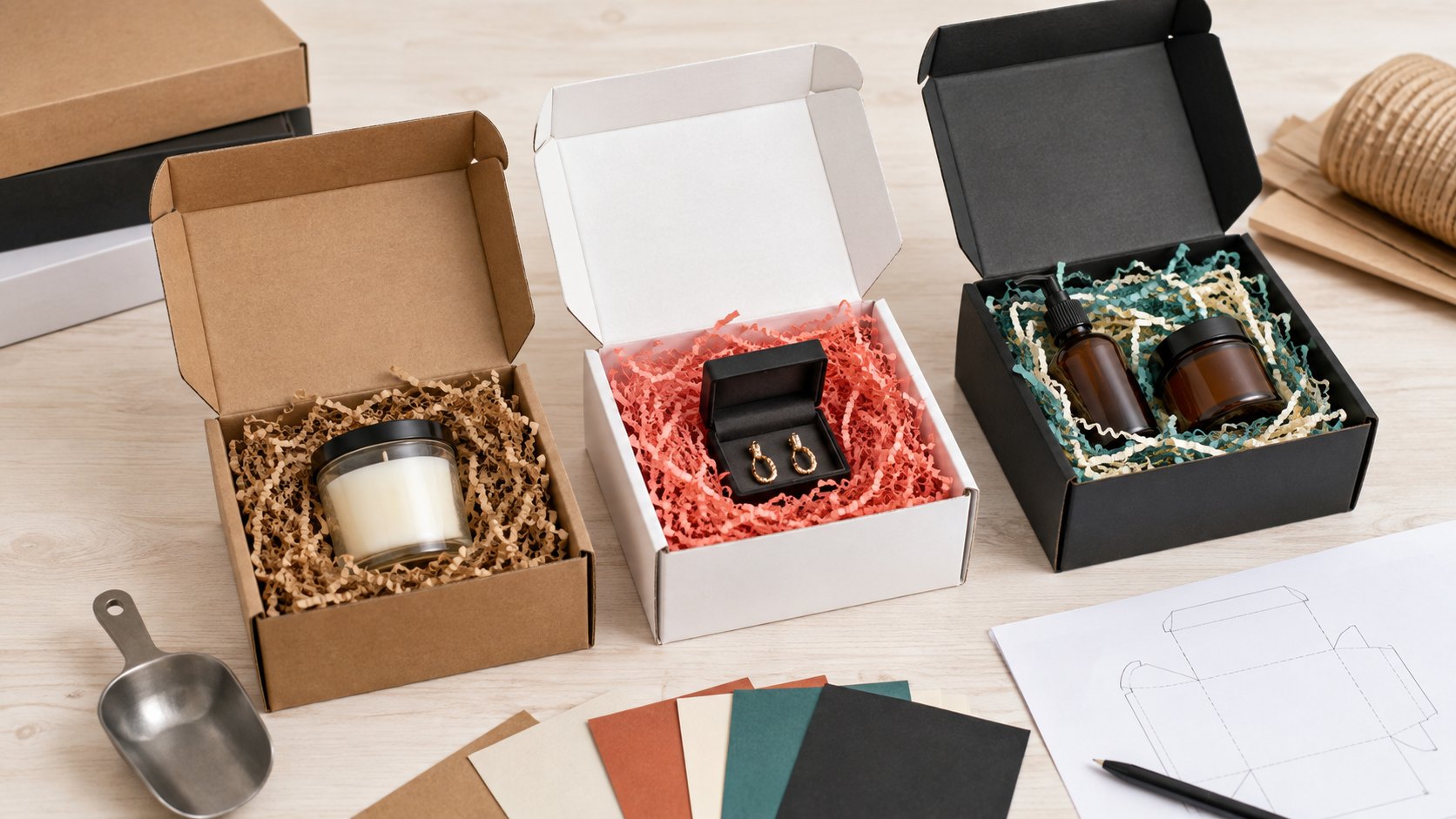
Choose paper filler by the actual box, product, presentation height, protection requirement, color plan, packing method, and shipping volume. Crinkle-cut paper usually creates more visible spring, while straight shredded paper can look softer and flatter; paper raffia is often a broader trade name whose exact strip style should be confirmed. To estimate quantity, pack the real product in the final-size box several times, weigh the filler used in successful packs, and calculate the order from that tested average instead of using a universal grams-per-box rule.
Papyrn packaging team experience
Paper filler inquiries often begin with only a color photo and a request for a price per kilogram. That is not enough to predict how many gift boxes the material will fill. Two suppliers can use similar names for strips with different widths, cuts, loft, and compression. Two warehouse packers can also use different amounts in the same box.
The practical starting point is one completed packaging set. Confirm the box and product first, then build the presentation layer around them. This reduces the risk of buying filler that looks attractive in a bag but leaves the product buried, unstable, too low in the box, or expensive to ship.
1. Paper raffia, shredded paper, and crinkle paper
These names overlap in international packaging inquiries. Do not assume that one name defines an exact cut. Use a reference photo, physical sample, strip description, color reference, and packing test to confirm what is being supplied.
Accordion-like paper strips that create visible volume and spring.
Gift boxes, candles, beauty products, subscription boxes, and sets that need a fuller presentation layer.
Fine or wider straight strips with a softer, flatter appearance.
Jewelry, accessories, stationery, small gifts, and shallow boxes where the product should remain easy to see.
Longer paper strands with a loose decorative look. Supplier naming and strip shape can vary.
Boutique gifts, hampers, PR kits, seasonal packaging, and natural or handmade brand styles.
Two or more compatible paper colors combined in one packing plan.
Seasonal campaigns, brand palettes, influencer kits, and sets that need color contrast without printing the filler.
2. How much paper filler do you need per box?
A box volume calculation can show that empty space exists, but it cannot convert that space into a reliable filler weight by itself. Paper strips form irregular air spaces, and the result changes with cut, paper, compression, product shape, and presentation standard.
Reliable purchasing method
Average filler weight from repeated successful sample packs x number of boxes to pack + agreed operating allowance = planning quantity
- Assemble the exact production-size box and place the real product, tray, pouch, tissue, card, and accessories inside.
- Add filler gradually until the product is presented at the intended height and the empty spaces are reasonably controlled.
- Close and reopen the box, then check whether the product shifts, sinks, becomes buried, or pushes against the lid.
- Remove and weigh the filler used in that successful pack. Repeat the test several times with the same packing method.
- Use the average tested amount for purchasing, then add an agreed allowance for packing variation, trimming, samples, and replacements.
- Repeat the test when the box, product, insert, bundle contents, filler cut, or presentation standard changes.
Do not estimate from one loose handful. Record the box version, product set, filler style, average tested weight, and approved packing photo so purchasing and warehouse teams are working from the same standard.
3. Six factors that change filler consumption
Inside box size
A small increase in length, width, or height can create much more empty space. Use the finished inside dimensions, not only the outside box size.
Product and insert volume
A tray, molded insert, pouch, tissue wrap, or secondary carton reduces the space that filler must occupy. Measure the complete packed set.
Desired product height
A product displayed near the top of the box usually needs more filler below it than a product resting on the bottom with filler only around the sides.
Strip cut and compression
Fine straight strips, crinkle-cut strips, and longer raffia-style strands do not occupy space in the same way. Loose packing and compressed packing also look different.
Protection requirement
Presentation filler may limit light movement, but it should not be treated as verified shock protection for fragile, sharp, heavy, or high-value products.
Packing consistency
Different packers can use different handfuls. A weighed sample pack, simple work instruction, and occasional check help control both appearance and consumption.
4. Match filler to the product and packaging job
Use a shallow, controlled layer so the product remains visible. A pouch or small inner box may do more protective work than the filler.
Use filler for presentation and light void control only after the box strength and protective packing for breakage risk have been addressed.
Keep bottles and jars upright where required. Use dividers or inserts when products must not collide, then add filler around the presentation layer.
Tissue paper may provide the main wrap. Filler can be used selectively for a gift-set look, but too much can add volume without improving protection.
Plan each product position first. Use an insert when placement matters, then use filler to soften gaps and coordinate the color story.
Do not rely on decorative paper filler alone. Confirm a stronger box, insert, dividers, edge protection, or another tested protective system.
For fragile or heavy goods, use the custom packaging sample guide to define what the physical sample must prove before mass production. Decorative filler should not replace drop, vibration, compression, or other testing required by the product and delivery route.
5. Single-color or mixed-color paper filler?
A single color is usually easier to repeat across orders and can keep the unboxing presentation quiet. Mixed colors can connect several brand or seasonal colors, but the ratio and mixing method need to be defined. A small amount of a high-contrast color can look very different from an equal two-color mix.
Color approval checklist
- Compare the filler under the same lighting used for the other packaging samples.
- Place it beside the actual mailer box, tissue paper, cards, stickers, and products instead of comparing isolated screen colors.
- Ask for a physical sample or agreed reference when an exact brand direction is important.
- Confirm whether a mixed-color order is supplied pre-mixed or packed as separate colors for the warehouse to combine.
- Check possible color transfer, dust, odor, and surface contact on light, porous, delicate, food-adjacent, or cosmetic products before approval.
- Use an inner bag, wrap, liner, or product carton when direct contact with filler is not suitable.
Coordinate filler with the base color of the box, printed tissue paper, cards, labels, and the products themselves. Not every item needs to use the exact same color; a controlled neutral plus one brand accent can be easier to source and repeat.
6. Is paper filler protective packaging?
Paper filler can provide light cushioning, reduce some visible empty space, and help hold lightweight products in a presentation position. It is not automatically a tested protective system. Sharp, fragile, heavy, liquid, high-value, or easily scratched products can require an insert, divider, wrap, bag, stronger box, edge protection, or another material selected for the actual hazard.
Test the complete pack, not the filler alone. The same filler may work for a jewelry pouch but be unsuitable for preventing two glass bottles from colliding. Claims about protection should be based on the product, packaging construction, delivery route, and required test standard.
7. Why lightweight filler can still affect freight
Paper filler is light but occupies space. International shipping can be charged by actual weight or dimensional weight, depending on the packed shipment and carrier method. Large loose bags, low compression, separate color bags, and inefficient outer cartons can increase chargeable volume.
Compare whether filler will ship alone, in bulk bags with flat boxes, or portioned inside assembled gift sets. Pre-packing can reduce warehouse labor but may increase shipment volume. Bulk packing can improve transport efficiency but shifts portion control and assembly work to the destination warehouse. The packaging shipping guide explains why product price and freight should be checked separately.
8. Sample and packing approval
Approve the filler as part of the complete packaging set. Check color, cut, texture, dust, odor, direct product contact, presentation height, product movement, closure, unpacking experience, packing time, and the weight used per successful pack. Use photos and a retained physical reference where practical.
If the product or box is still changing, postpone the final filler quantity. A one-centimeter box change, a new insert, or a second product can alter the empty space and make the previous grams-per-box test invalid.
9. What to send for an accurate paper filler quote
Buyer quote checklist
- Finished inside box size and a photo of the assembled box
- Product size, weight, quantity per box, and product photos
- Any tray, pouch, tissue wrap, card, or insert used inside the box
- Preferred filler style, strip appearance, paper color, and mixed-color ratio if known
- Target quantity expressed as boxes to pack, estimated filler weight, or both
- Required packing format and whether colors should be pre-mixed
- Destination, postal code, target date, and other packaging items shipping together
- Any contact, cleanliness, odor, color-transfer, recycling, or compliance requirement
Reviewed by Papyrn packaging team. Updated September 5, 2026. This guide provides planning principles, not a universal filler density, fixed grams-per-box figure, protective-performance claim, color guarantee, MOQ, price, freight quote, or compliance statement. Final filler style, paper, cut, color, quantity, packing, product-contact suitability, protection plan, shipping volume, timing, and cost depend on the confirmed box, product, sample, destination, and current production arrangement.
FAQ
Paper filler questions for ecommerce packaging
How much paper filler do I need for each gift box?
There is no reliable universal amount because the result depends on the inside box size, product volume, inserts, desired presentation height, filler cut, compression, and packing method. Make several successful sample packs with the real box and product, weigh the filler used, and use the average tested amount as the purchasing reference.
Is paper raffia filler the same as shredded paper filler?
Buyers and suppliers often use paper raffia, shredded paper, crinkle paper, and gift box filler as overlapping terms. Strip shape, width, length, texture, paper, and compression can still differ, so confirm with a photo, sample, or written specification rather than relying only on the name.
Is crinkle paper better than straight shredded paper?
Neither is universally better. Crinkle-cut strips often create spring and visible volume, while straight strips can look softer and flatter. The best option depends on the product, box depth, desired presentation, packing speed, and required movement control.
Can paper filler protect fragile or heavy products during shipping?
Paper filler can provide presentation and light support, but decorative filler alone should not be treated as verified protection for fragile or heavy products. Use an appropriate box, insert, divider, wrap, or tested protective system for the actual shipping risk.
Can paper filler match my brand colors?
Single colors, mixed colors, seasonal palettes, and close brand-color directions can be planned from available papers and production options. Screen colors are not physical guarantees, so important color matching should be checked against an agreed sample or reference.
Does paper filler increase shipping cost?
Paper filler is lightweight but bulky. Its packed bag volume, carton packing, compression, quantity, and whether it ships alone or with boxes can affect chargeable freight and landed cost. Confirm the final shipment packing rather than comparing product weight alone.
Should filler be packed inside each box before shipping?
Individual pre-packing can simplify warehouse work but may increase assembly labor and shipment volume. Bulk bags can be more efficient for transport but require consistent portioning at the warehouse. Compare labor, presentation control, carton volume, and delivery requirements before choosing.
What should I send for a paper filler quotation?
Send the inside box size, product size and weight, products per box, photos, other inserts or wrapping, filler style, color, number of boxes to pack, destination, packing preference, and target date. A physical packing test is the best basis for estimating the amount per box.