Short answer
What are Papyrn's common custom tissue-paper specifications?
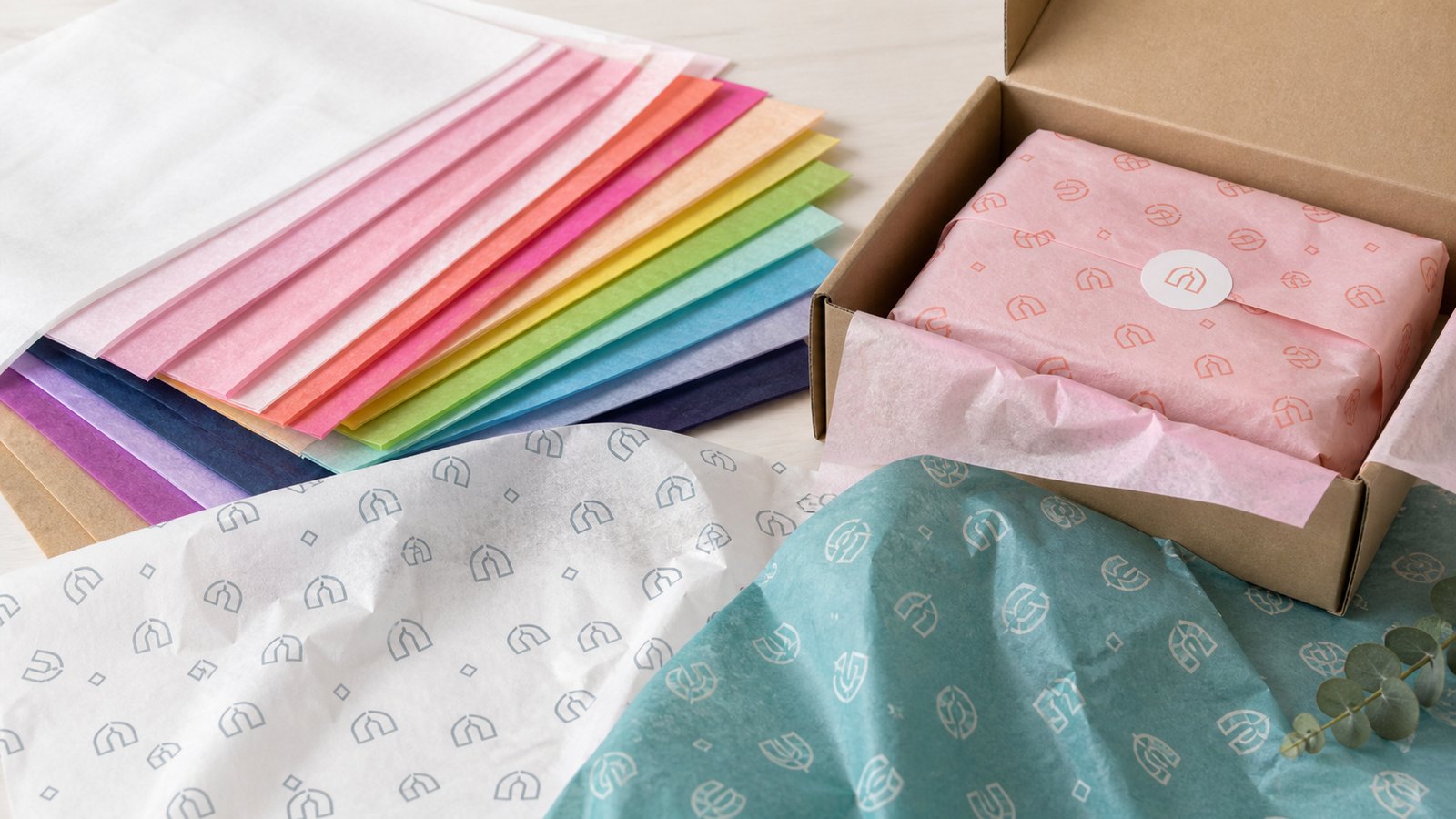
Papyrn commonly supplies 17 gsm tissue paper in 50 x 70 cm sheets, with custom sizes available. The standard printed program is best for solid one-color or two-color repeat logos and does not support gradient artwork. Logo size, spacing, direction, paper color, and ink color can be customized after file review. As a current planning reference, suitable 50 x 70 cm one-color tissue starts around 500 sheets at about US$0.17 per sheet; suitable two-color tissue starts around 1,000 sheets at about US$0.23 per sheet. Final price depends on the confirmed paper, colors, coverage, layout, packing, destination, and production arrangement.
Papyrn packaging team experience
Most tissue-paper inquiries begin with a brand color, logo, and reference photo. Buyers often expect the ink to look exactly like the screen and the paper to be either transparent or opaque. In practice, lightweight tissue is semi-transparent, and the base paper color becomes part of the printed result. The same ink can look different on white, blush, green, navy, or kraft-toned tissue.
The most reliable low-MOQ plan is usually a suitable stock tissue color combined with one strong-contrast ink color. Two-color printing is useful when both colors are essential, but it starts at a higher quantity and price. When the second color can come from the paper itself, a stock colored sheet plus one printed color can create a similar visual direction with a simpler production plan.
1. Quick specifications for custom printed tissue paper
50 x 70 cm (the same sheet may also be written as 70 x 50 cm depending on orientation)
Available after the finished sheet, folding, packing, quantity, and production layout are confirmed
17 gsm lightweight tissue paper
Naturally semi-transparent; the visible result changes with paper color, product color, and the number of layers
Simple repeat logos or patterns in one ink color; two-color printing is available for suitable artwork
Not supported in Papyrn's standard one-color or two-color tissue-paper printing program
Custom repeat spacing, direction, angle, and approximate coverage after artwork review
These specifications describe Papyrn's current standard direction, not every tissue-printing process in the market. A different material, print method, finish, size, or quantity may need a separate production review.
2. Can your requested tissue-paper color be printed?
There are two color decisions: the color of the tissue paper and the color of the printed ink. Papyrn can compare the requested look with available stock paper colors, then plan a custom ink color for suitable one-color or two-color artwork. If the requested paper shade is not available as a practical stock color, quantity, timing, and cost may change.
For the standard program, prepare solid-color artwork. A gradient, photographic fade, transparency effect, or many-color illustration should be simplified into one or two solid ink colors. A screen preview can communicate direction, but it cannot guarantee the physical color because the paper base, ink, coverage, overlapping layers, and lighting all affect appearance.
Color planning order
Choose stock tissue color + choose one or two solid ink colors + check contrast + confirm repeat layout + review a physical reference or sample
3. Can the logo repeat follow your requested layout?
Yes. A custom repeat can be prepared after the logo and basic spacing request are received. “Repeat my logo” is not enough for a final layout because the visible result changes with logo size, gap, row pattern, angle, and how the sheet is folded.
Logo width or height
Send the preferred printed logo size, not only the logo file. A logo that looks balanced on a screen may feel too small or too dense on a 50 x 70 cm sheet.
Approximate gap
Share the desired horizontal and vertical distance between logo repeats. A reference photo is useful, but a numeric target makes the first layout more accurate.
Direction and angle
Choose straight rows, staggered rows, or an angled repeat. Confirm whether every logo faces one direction or alternates.
Print coverage
A sparse pattern and a dense all-over repeat do not use the same ink coverage or create the same visual effect. Coverage can also influence the quotation.
Wrapping and folding
Explain how the tissue will be folded or wrapped around the product. The repeat should remain visible in the intended unboxing view.
One design or several versions
Quantity is normally checked per size, paper color, print color, and artwork version. Several small logo versions can split the run and change setup allocation.
Send a vector logo when possible. Papyrn's custom packaging artwork guide explains AI, PDF, EPS, raster images, colors, and proof files. The production layout should be approved as one clearly named version before printing.
4. What tissue-paper size should an ecommerce brand choose?
A common sheet size is 50 x 70 cm. This can work for apparel, accessories, jewelry boxes, beauty products, candles, gifts, and general ecommerce wrapping, but the correct size depends on the product and folding method. A small jewelry box may use part of a sheet, while apparel or a larger mailer may need the full sheet or a custom format.
Before requesting a custom size, test a paper sheet around the actual product. Record the flat size, how many folds are needed, whether the logo remains visible, and whether one sheet or two sheets are used per order. Custom size can reduce waste, but it may also change production layout, packing, MOQ, and price.
5. Is 17 gsm tissue paper transparent?
Seventeen-gsm tissue paper is lightweight and naturally semi-transparent. It is not designed to behave like opaque wrapping paper. White and pale colors usually reveal more of the product or layer below. Darker tissue can appear visually stronger, but light can still pass through and folded edges will look deeper than a single layer.
Transparency should be judged in the intended use: one sheet over a white product, colored tissue around dark apparel, two overlapping layers, or folded tissue inside a kraft mailer box can all look different. A physical stock swatch or previous sample photo is more useful than a screen color alone.
6. One-color vs two-color printing: MOQ and price
The figures below are Papyrn's current planning references for suitable 50 x 70 cm artwork. They help buyers compare simple one-color and two-color directions, but they are not fixed public quotations.
50 x 70 cm
500 sheets
Current planning reference: about US$0.17 per sheet
Best starting point for a simple repeat logo with suitable paper and ink contrast
50 x 70 cm
1,000 sheets
Current planning reference: about US$0.23 per sheet
Two print colors need more setup, alignment, and production control
The final quotation can change with paper color, ink colors, logo coverage, repeat spacing, custom size, quantity split by design, folding or packing, sample requirements, freight, duties, taxes, and current factory arrangement. Confirm what the unit price includes before comparing suppliers.
7. Why can printed color look weaker or change on colored tissue?
Tissue paper is thin, and most standard inks are not an opaque wall between the design and the paper. The base paper color influences the visible ink. This is especially noticeable when a light ink is printed on dark or highly saturated tissue.
Usually gives the clearest contrast and is a practical first option for small-brand logo repeats.
Can create a tonal brand effect while keeping the artwork to one print color. Confirm contrast with a sample or previous printed reference.
The tissue color can influence or weaken the ink appearance. The result may look muted or shifted rather than matching the screen color.
Useful when both colors are important to the identity, but it needs a higher MOQ and more production control than one-color printing.
Often a cost-effective alternative to a two-color printed design. Choose a stock paper close to one brand color, then print the second visual element in one ink color.
For clearer visibility, start with contrast: darker ink on white or pale tissue is usually easier to control than a pale ink on a dark sheet. For a softer tonal look, choose a stock paper close to the brand palette and print one darker related color. Review sample photos for direction, then use a physical proof when the exact interaction matters.
8. What should you check in a tissue-paper sample?
A sample should answer questions that a digital layout cannot. It should be reviewed together with the actual product, box, and other packaging items when possible.
Sample review checklist
- Actual tissue-paper color and how it changes against the product or box
- Ink visibility and contrast on the selected stock paper
- Logo repeat size, spacing, angle, and orientation
- Whether the tissue feels sufficiently light and semi-transparent for the intended wrap
- Color interaction when two sheets overlap or the tissue is folded
- Rub, fold, wrinkle, and normal handling appearance
- How the tissue coordinates with the box, sticker, card, ribbon, or filler
A previous production photo can help shortlist paper and ink combinations, but screens, cameras, lighting, and image compression change color. It is a reference, not a substitute for an approved physical sample when color is critical.
9. How to reduce cost without losing the branded effect
- Choose one stock tissue color and one high-contrast print color.
- Use the paper color as one part of a two-color brand palette instead of printing two inks.
- Keep one repeat layout across several products where the sheet size works.
- Avoid splitting the MOQ into many paper colors or logo versions.
- Test 50 x 70 cm before requesting a custom size.
- Coordinate tissue with a sticker or card instead of adding a second ink color only for a small detail.
- Confirm the box size and number of tissue sheets used per order before calculating total packaging cost.
10. What to send for an accurate custom tissue-paper quote
Buyer quote checklist
- Finished tissue size, or confirmation that 50 x 70 cm is acceptable
- Quantity for each paper color and artwork design
- Preferred stock paper color, with two acceptable alternatives if possible
- One-color or two-color printing
- Logo file in AI, editable PDF, EPS, or another suitable vector format
- Approximate logo size and distance between repeats
- Straight, staggered, angled, or other repeat direction
- Brand ink-color reference and acceptable color tolerance discussion
- Product type, wrapping method, and reference unboxing photo
- Sample requirement, destination country, postal code, and required arrival window
Reviewed by Papyrn packaging team. Updated August 28, 2026. The MOQ and prices in this guide are current planning references for suitable 50 x 70 cm tissue-paper projects, not binding quotations. Final paper color, ink color, print result, size, weight, transparency, layout, MOQ, unit price, sample, production time, packing, freight, duties, and taxes depend on the confirmed artwork, quantity, destination, and current production arrangement.
FAQ
Custom printed tissue-paper questions
Can Papyrn print my requested color on tissue paper?
Papyrn supports custom ink-color planning for suitable one-color and two-color tissue-paper artwork. The result depends on the selected tissue color, ink color, coverage, and print process. A screen color is not a physical print guarantee, so important colors should be checked against a sample or agreed reference.
Can the logo repeat layout follow my requested spacing?
Yes. Send the logo file, preferred printed logo size, approximate horizontal and vertical gap, pattern direction, and a reference image. Papyrn can prepare a repeat layout for confirmation before production.
What is the standard custom tissue-paper size?
A common size is 50 x 70 cm. Custom sizes can be discussed after the wrapping use, folding, packing, quantity, and production layout are confirmed.
Is 17 gsm tissue paper transparent?
Seventeen-gsm tissue paper is lightweight and naturally semi-transparent rather than fully opaque. Paper color, product color, folding, and overlapping layers all change how transparent it appears.
What are the MOQ and price for one-color printed tissue paper?
Papyrn's current planning reference for 50 x 70 cm tissue paper is about US$0.17 per sheet at 500 sheets for suitable one-color artwork. This is not a fixed public quotation and excludes unconfirmed changes, shipping, duties, taxes, and special requirements.
What are the MOQ and price for two-color printed tissue paper?
Papyrn's current planning reference for 50 x 70 cm two-color printed tissue paper starts around 1,000 sheets at about US$0.23 per sheet for suitable artwork. Final pricing depends on the paper color, ink colors, coverage, layout, packing, destination, and current production arrangement.
Can a gradient logo be printed on tissue paper?
Papyrn's standard one-color and two-color tissue-paper printing program is intended for solid-color logo and pattern artwork and does not support gradient effects. Simplify the artwork into one or two solid colors for this program.
Why does a light logo change on dark tissue paper?
Lightweight colored tissue influences the ink that is printed over it. A light ink on a dark or strong paper color can look muted or shifted. Compare a previous sample or physical proof, or use a lighter stock paper with a darker ink for clearer contrast.