Short answer
What belongs on the card?
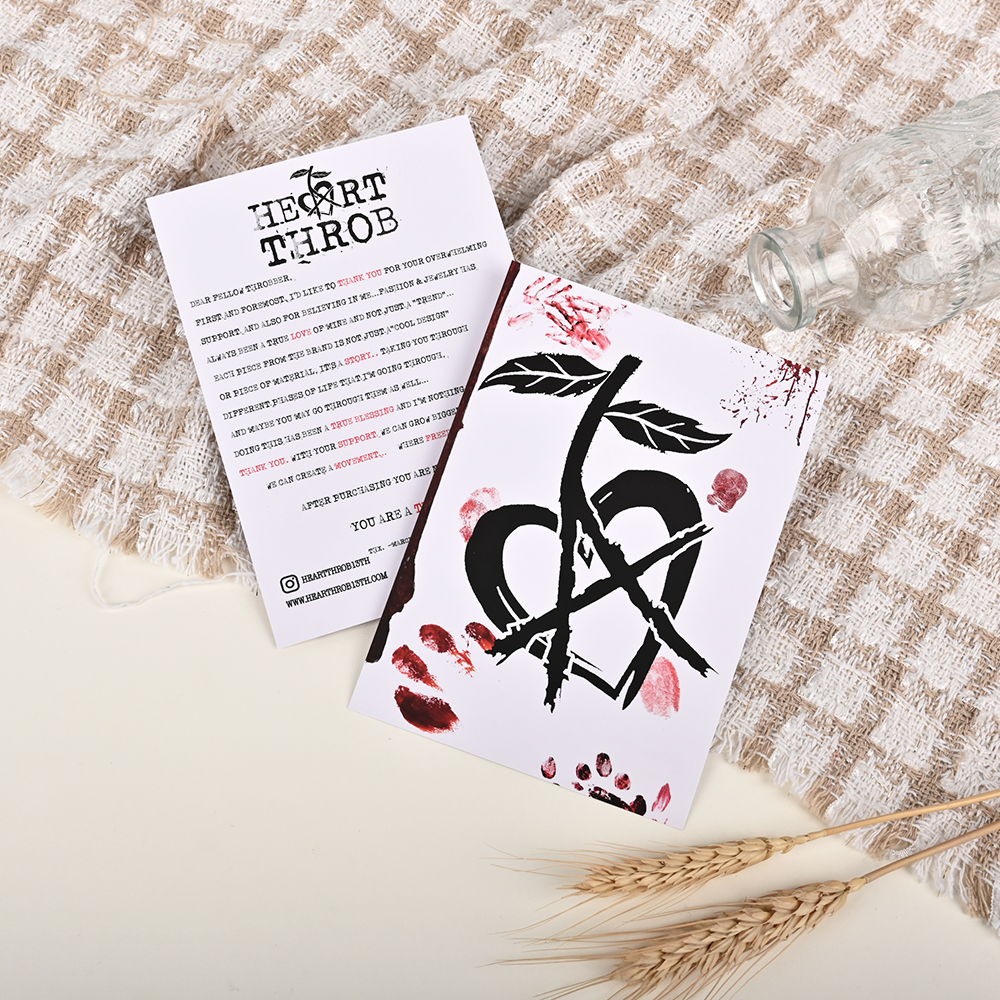
Start with one job: thank the buyer, explain product care, offer support, or point to one relevant next step. Use a short headline, only the instructions the buyer needs, a recognizable brand name, and a contact route or clearly labeled QR code. Keep required safety or legal information in the form appropriate to the product and destination market; a web link does not automatically replace it.
Choose the action before writing the copy
A product insert is handled after the order arrives, so its content should answer a post-purchase question. For a handmade gift, a warm thank-you and care note may be enough. For a skincare accessory or delicate item, usage and support details may be more useful. For a refillable product, a reorder link may be appropriate after the customer has learned how to use the first order.
Papyrn often sees small brands try to combine a thank-you, several social accounts, a discount, a review request, and a QR code on one flat card. That makes the message difficult to scan and creates more artwork to approve. Select one primary action and, if necessary, one secondary support route. If you are still deciding between a card and a seal, read the thank-you card, QR card, and sticker comparison.
Three useful product insert card layouts
Short personal note, brand name, and one relevant next step. Keep enough white space to read it quickly.
Essential steps, support contact, and optional link to longer instructions. Check that required information is not hidden behind a QR code.
A label such as “Scan for care instructions,” a working URL, and a fallback contact route. Test the printed card, not just the artwork preview.
A review invitation needs its own policy check. Do not imply that a buyer must leave a positive review to receive support or a benefit; confirm the current rules of the marketplace or review platform first.
Size, print, and a realistic small-run budget
A common flat-card starting size is 4 x 6 in (about 102 x 152 mm), but the right size depends on the box opening, product, and amount of copy. A card that barely fits a mailer may bend during packing; a smaller card with dense text may be unreadable. Put a paper mockup inside the actual packed order before approving dimensions.
Suitable custom flat-card projects can start at 100 cards per design. For a straightforward 4 x 6 in card without special finishing, approximately US$0.30 per card at 100 cards is a planning reference. Such a small run is close to a minimum charge, so do not extrapolate this rate to larger quantities or to sticker sheets. Printing on both sides, separate designs, special paper, finishing, packing, and freight require a project-specific quotation.
Ask whether the quoted quantity is per design. Two language versions at 100 cards each are not necessarily priced like one 200-card design, because files, setup, sorting, and packing can differ.
Make the QR code useful after delivery
Choose a stable page you can maintain, such as product care or customer support. Print a short label beside the code so a buyer knows what will open. Test the destination on a phone with no account login, then scan a physical proof at final size after any coating or lamination. Check contrast, quiet space, trim margin, and whether the code could be hidden by a fold or insert placement.
Do not send a buyer to a generic homepage when the card promises product instructions. If a campaign URL may change, plan a redirect and name the person responsible for maintaining it. See the packaging artwork guide for file, bleed, font, and proof checks.
Before approving the print proof
Review the finished card in its package
- Confirm exact spelling, language, contact details, QR target, and artwork version.
- Check the card at actual print size, including type size, contrast, trim-safe area, and front/back orientation.
- Check whether the paper and finish suit writing, scanning, and the brand's intended look.
- Place the card in a packed order and confirm it does not cover the product, fold, or get discarded with filler.
- Confirm how many cards go into each order and how multiple designs or languages will be separated.
A digital proof can catch text and layout errors; a physical sample is more useful when color, paper feel, special finish, or QR scanning matters. The sample guide explains what each sample type can and cannot prove.
What to send for a useful quote
Send the finished dimensions, quantity per design, number of designs, print sides, preferred paper and finish, exact copy, artwork, QR destination if any, packing placement, and delivery country or postal code. A photograph of the box and product helps check card fit. Papyrn can discuss cards with the rest of the custom insert-card and sticker range, but cards and sticker units should be quoted separately.
When cards ship with boxes or tissue, ask whether packing and freight are included. The shipping and DDP guide explains how to compare product price and delivery terms.
Updated October 5, 2026. Sizes, minimum quantities, and prices above are planning references, not fixed offers. Final terms depend on artwork, paper, print sides, finish, quantity per design, packing, freight, and current production arrangements. Check destination-market labeling and review-platform rules for the actual product and channel.
FAQ
Product insert card questions
What should an ecommerce product insert card say?
Give the card one primary purpose: a short thank-you, product care, support information, or a clearly labeled next step. Include the brand name and a usable contact or destination. Keep essential product information available in the format required for your market.
Can I put a QR code on a thank-you card?
Yes. Label what the code opens, link it to a maintained mobile-friendly page, and test the printed code at final size and finish on several phones before approving production.
What size and quantity are common for custom insert cards?
A flat 4 x 6 in card is a common starting point, and Papyrn can discuss other sizes. Suitable flat-card orders can start at 100 cards per design. Confirm paper, printing, finish, design count, and packing before treating a quantity as final.
How much does a small run of insert cards cost?
For planning, a straightforward 4 x 6 in flat card without special finishing is about US$0.30 per card at 100 cards per design. At this small quantity the setup creates a practical minimum charge. This is a card reference, not a sticker price or a binding quotation; freight and final specifications need a separate check.
Should a product insert ask for a review?
A neutral request for an honest review may be appropriate, but marketplace and review-platform policies vary and can change. Do not promise incentives, filter for positive reviews, or print an unverified policy claim. Check the rules for the sales channel before approving the copy.
What files should I send for a product insert card quote?
Send finished size, quantity per design, number of designs, print sides, paper and finish preference, artwork or logo, exact copy, QR destination if used, packing method, and delivery address. A reference photo of the finished package helps confirm fit.